

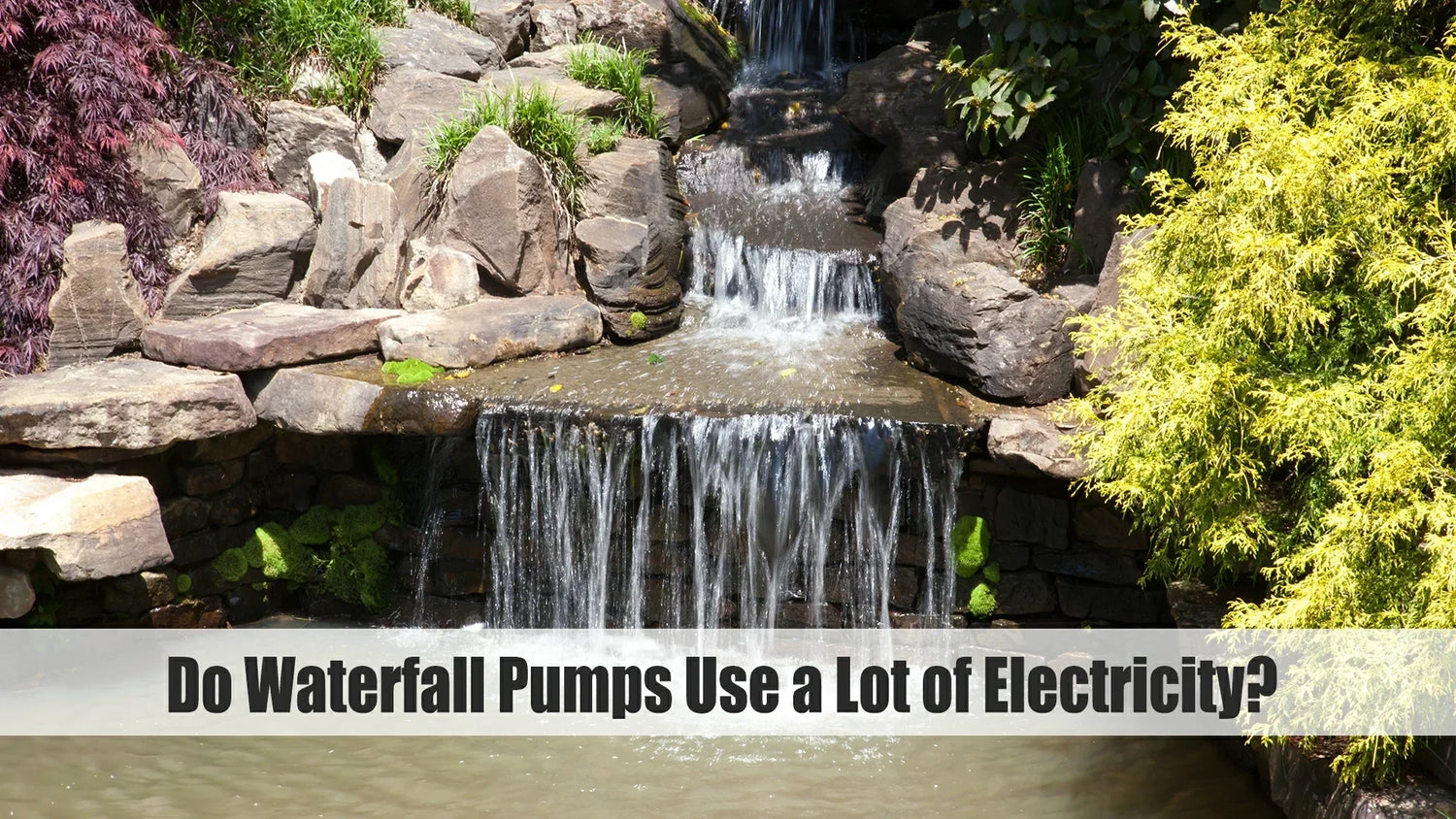
Wasserfälle im Garten haben eine magische Art, aus einem ruhigen Garten einen lebendigen Ort zu machen. Die Bewegung, das Geräusch, das Glitzern im Sonnenlicht – wer es einmal gesehen hat, möchte es nicht mehr missen. Und fast ausnahmslos lautet die zweite Frage, die aufkommt:
„Verbraucht eine Wasserfallpumpe viel Strom?“
Das ist eine berechtigte Frage. Ein Wasserfall läuft über Stunden, manchmal rund um die Uhr. Daher ist es natürlich, sich zu fragen, ob sich dies als Überraschung auf der Stromrechnung bemerkbar machen wird. Die Wahrheit ist jedoch praxisnäher – und in der Regel viel günstiger –, als die meisten Leute erwarten. Nachdem ich selbst über Jahre hinweg mit Dutzenden von Teichbesitzern zusammengearbeitet und kleine bis mittelgroße Wasserfälle installiert und aufgerüstet habe, habe ich gesehen, wie sich verschiedene Setups auf den Energieverbrauch auswirken, was die Kosten tatsächlich beeinflusst und wie man diese Kosten niedrig hält.
Dieser Leitfaden schlüsselt alles auf unkomplizierte, praxisnahe Weise auf – kein Fachchinesisch, kein Rätselraten.
Warum der Stromverbrauch einer Wasserfallpumpe wichtig ist
Eine Wasserfallpumpe ist kein Haushaltsgerät, das bei Nichtgebrauch einfach ausgeschaltet werden kann. Ob sie einen kleinen 20-cm-Auslauf oder diesen beeindruckenden, breiten, schleierartigen Wasserfall betreibt, sie bewegt das Wasser, um Stagnation zu verhindern und die Filterung zu unterstützen. In den meisten Gartenanlagen bedeutet das viele Stunden Laufzeit pro Tag.
Aus diesem Grund kann sich selbst eine kleine Abweichung in der Wattzahl summieren. Selbst 40 Watt für eine Pumpe, die 24 Stunden am Tag arbeitet, mögen auf dem Papier nicht viel erscheinen, aber wenn man das auf einen Monat hochrechnet, erhält man einen bedeutenderen Wert. Deshalb wollen Kunden oft echte Zahlen und nicht nur bloße Beteuerungen.

Die gute Nachricht? Moderne Pumpen – insbesondere energieeffiziente und solarbetriebene Modelle – verbrauchen weit weniger Strom, als sich die meisten vorstellen können.
So schätzen Sie die Stromkosten Ihrer Wasserfallpumpe
Um zu bestimmen, was Ihre Wasserfallpumpe wirklich kostet, benötigen Sie nur eine einfache Formel. Sie brauchen kein Spezialwerkzeug oder einen komplizierten „Teichpumpen-Stromkostenrechner“ – nur diese:
(Pumpenleistung in Watt ÷ 1000) × Stunden pro Tag × Strompreis = Tägliche Betriebskosten
Hier ein praktisches Beispiel:
- Pumpenleistung: 40 W
- Laufzeit: 24 Stunden
- Strompreis: 0,15 $ pro kWh
Berechnung:
- 40 W ÷ 1000 = 0,04 kW
- 0,04 × 24 = 0,96 kWh/Tag
- 0,96 × 0,15 $ = 0,14 $/Tag
Das ergibt etwa 4–5 $ pro Monat, vorausgesetzt, das Gerät läuft durchgehend.
Sogar größere Pumpen – sagen wir 70 W oder 80 W – kosten für den durchschnittlichen Haushalt in der Regel weniger als 10 $ pro Monat. Aus diesem Grund sind viele Teichbesitzer überrascht, wenn sie feststellen, dass ihr Wasserfall zu den wirtschaftlichsten Gartenelementen im Betrieb gehört.
Was beeinflusst den Stromverbrauch tatsächlich?

Nicht alle Wasserfälle sind gleich, und das gilt auch für Pumpen. Dies sind die Faktoren, die bei der Schätzung des Energieverbrauchs oder der Auswahl des passenden Setups am meisten ins Gewicht fallen:
1. Leistung und Effizienz der Pumpe
Dies ist der Hauptfaktor für die Stromkosten. Eine Pumpe mit höherer Wattzahl kann mehr Wasser und Druck erzeugen, als Sie jemals benötigen würden, es sei denn, Ihr Wasserfall ist besonders breit oder hoch. Für kleine bis mittlere Anlagen im Garten sind Pumpen, die auf ausgeglichenen Durchfluss und geringen Stromverbrauch ausgelegt sind – ähnlich dem auf Öko-Effizienz ausgerichteten Ansatz, den Poposoap bei seinen Brunnen- und Wasserfallsystemen verfolgt –, deutlich effizienter.
2. Höhe und Design des Wasserfalls
Es kostet Energie, Wasser nach oben zu befördern. Ein sanfter Wasserfall auf Teichniveau benötigt viel weniger Energie als ein hoher, mehrstufiger Wasserfall. Sogar die Form des Auslaufs beeinflusst, wie viel Durchfluss erforderlich ist, um einen glatten, gleichmäßigen Wasserschleier zu erzeugen.
3. Länge und Verlegung der Leitungen
Lange Schläuche, unnötige Biegungen und schmale Rohre erhöhen den Widerstand. Mit zunehmendem Widerstand steigt auch der Kraftaufwand der Pumpe. Ein fachgerecht installiertes System mit sauberen, direkten Leitungen arbeitet spürbar effizienter.
4. Betriebszeiten
Ein Wasserfall muss nicht unbedingt 24 Stunden am Tag laufen. Wenn das Ökosystem des Teichs stabil ist und die Filterung nicht ausschließlich über die Pumpe erfolgt, entscheiden sich viele Hausbesitzer für einen Betrieb tagsüber und abends. Das allein kann die Energiekosten halbieren.
Möglichkeiten zur Senkung der Stromkosten Ihrer Wasserfallpumpe
Wenn Sie Ihren Energieverbrauch niedrig halten möchten, bewirken diese praktischen Schritte einen spürbaren Unterschied:
Verwenden Sie die richtige Pumpe für Ihre Wasserfallgröße
Ein weiteres häufiges Problem sind überdimensionierte Pumpen. Hausbesitzer installieren oft eine Pumpe, die viel größer ist als nötig, in der Annahme: „Mehr Durchfluss ist besser.“ Tatsächlich ist eine ausgewogene Pumpe günstiger im Betrieb und erzeugt oft ein attraktiveres Wasserbild.
Regelmäßige Wartung von Pumpe und Filter
Eine saubere Pumpe verbraucht weniger Strom und hält länger. Eine der einfachsten Möglichkeiten, den Anstieg des Stromverbrauchs zu verhindern, ist die Entfernung von Algen, Ablagerungen und Schlamm.
Verkürzen oder vereinfachen Sie die Leitungsführung
Weniger Distanz und weniger scharfe Kurven bedeuten weniger Widerstand und geringeren Energieverbrauch.
Verwenden Sie eine Zeitschaltuhr oder einen intelligenten Stecker
Wenn der Wasserfall nachts nicht laufen muss, planen Sie ihn einfach so, dass er ausgeschaltet wird. Viele Hausbesitzer lassen ihren Wasserfall von morgens bis abends laufen und erhalten dennoch einen gesunden Teich.
Ziehen Sie Solarenergie für kleinere Wasserfälle in Betracht
Mit solarbetriebenen Systemen, wie sie Poposoap für Brunnen, Filter und kompakte Wasserfälle anbietet, kann man einen Wasserfall ohne Strom realisieren – zumindest was die laufenden Kosten angeht. Effiziente Gleichstrommotoren und darauf abgestimmte Solarpaneele ermöglichen es solchen Systemen, einen beeindruckenden Durchfluss im Freien zu liefern, während die laufenden Kosten bei Null bleiben.

Realistische Beispiele für den Stromverbrauch
Hier sind einige Einblicke aus typischen Gärten:
- Kleiner Auslauf (20–30 cm)
40-W-Pumpe → 4–5 $ pro Monat
- Mittlerer Auslauf: 30–60 cm
60–80-W-Pumpe → 6–10 $ pro Monat
- Solarbetriebener dekorativer Wasserfall
Betrieb bei Tageslicht → 0 $ pro Monat
Diese Beispiele repräsentieren die meisten Teichanlagen in Wohngebieten und zeigen, warum Wasserfallpumpen selten zu einer finanziellen Belastung werden.
Fazit: Sie können den Wasserfall genießen, ohne sich über die Rechnung sorgen zu müssen.
Ein Wasserfall muss kein teures Vergnügen sein. Mit der richtigen Pumpengröße, einer intelligenten Installation und regelmäßiger Wartung kosten die meisten Wasserfälle nur ein paar Dollar im Monat. Und da Solaroptionen leistungsfähiger sind als je zuvor, können Sie das Geräusch des fließenden Wassers sogar völlig ohne laufende Stromkosten genießen. Ganz gleich, ob Sie Ihren ersten Wasserfall planen oder ein bestehendes System aufrüsten: Der Schlüssel dazu, von Vermutungen zu sicherem Wissen zu gelangen, liegt in der Wahl einer effizienten Pumpe – und eines durchdachten Gesamtsystems.

70W Solar-Wasserfallpumpen-Set (2200 l/h) mit 12"-Auslauf
248,99 $
Erstellen Sie atemberaubende solarbetriebene Wasserfälle mit dieser 70W-Pumpe und dem Auslauf-Element. Ideal für umweltfreundliche Teichanlagen mit starkem, gleichmäßigem Durchfluss.
FAQs: Strom- & Energieverbrauch bei Wasserfallpumpen
Normalerweise nicht. Eine Wasserfallpumpe für einen durchschnittlichen Garten verbraucht weniger Strom als eine herkömmliche Haushaltsglühbirne.
Folgen Sie einfach der einfachen Formel Watt × Stunden × Strompreis. Das ist im Grunde das, was jeder Teichpumpen-Stromkostenrechner tun würde.
Ja. Solarpumpen eliminieren die Betriebskosten vollständig und sind ideal für dekorative Wasserfälle oder Wasserfälle mit mittlerem Durchfluss.
In diesem Fall ist eine elektrische Pumpe sicherlich passender; Sie können dennoch nach einem energieeffizienten Modell suchen.
Ja, bei kleinen und mittleren Anlagen – insbesondere bei gut konzipierten Systemen wie den Solar-Wasserfall- und Teichlösungen von Poposoap.


Hinterlasse einen Kommentar
Alle Kommentare werden vor der Veröffentlichung geprüft.
Diese Website ist durch hCaptcha geschützt und es gelten die allgemeinen Geschäftsbedingungen und Datenschutzbestimmungen von hCaptcha.