

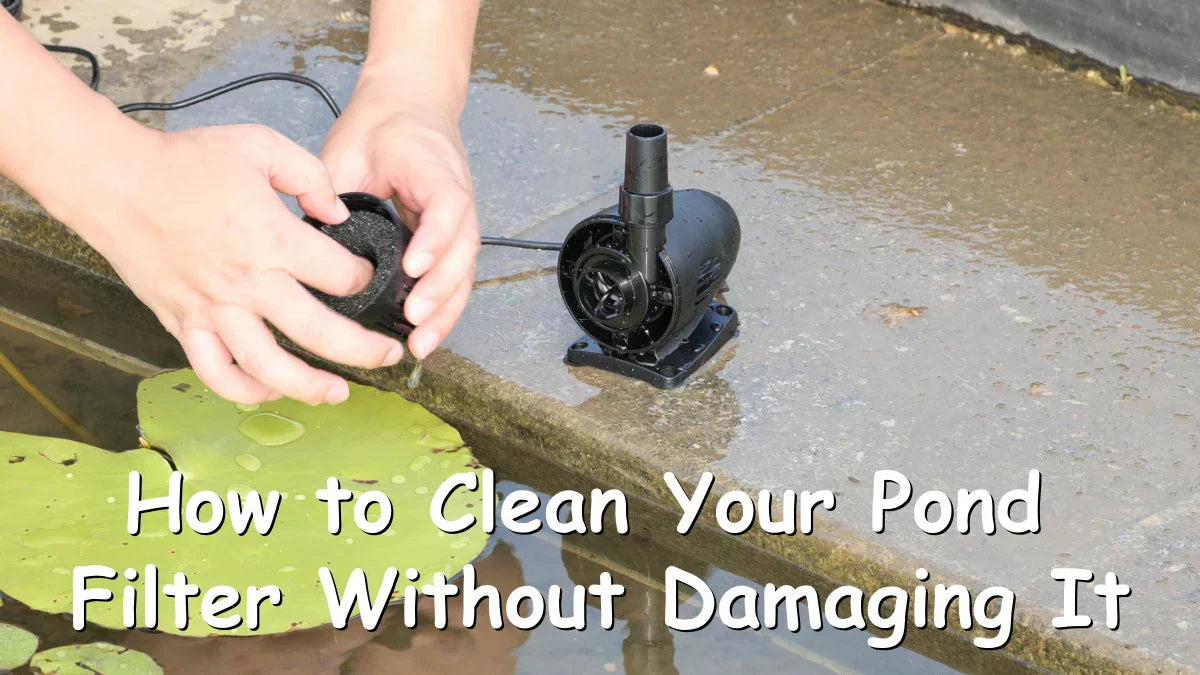
To clean a pond filter without damaging it, gently rinse the filter pads and bio-media in a bucket of pond water—never use tap water or hoses, as chlorine destroys beneficial bacteria. Perform this maintenance every 2-4 weeks during summer or when water flow reduces. Always use a filter system with safe low voltage (12V-24V) components to ensure there is no risk of electric shock while handling wet equipment.
Let's be honest: cleaning a pond filter is nobody's favorite chore. It’s slimy, it smells a bit like a swamp, and it’s messy. But if you’ve ever invested in a pond or solar fountain, you know that crystal clear water doesn't happen by magic.
At the heart of every healthy pond is a well-maintained filter. However, many beginners worry about how to clean it without upsetting the delicate balance of the ecosystem. In this guide, we’ll walk you through exactly when and how to clean, and why Poposoap's safe low voltage design makes this messy job much safer for you and your pets.
1. When to Clean Your Filter
Over-cleaning is actually worse than under-cleaning. If you scrub everything spotless, you destroy the colonies of beneficial bacteria (Nitrosomonas) that naturally detoxify your water.

- Test flow, not just looks: If the water flow from your fountain or waterfall becomes weak, it’s time to clean.
- Seasonal spikes: In hot months (July-August), algae grows faster, so you may need to rinse every 2 weeks.
- After storms: Heavy rain washes debris into the pond. Check your skimmer or filter box immediately after a storm.
2. Safety First: The Advantage of Safe Low Voltage
Before you stick your hands in the water, let's talk about safety. Traditional AC pond pumps run on 110V high voltage. If you forget to unplug one before maintenance, a cracked seal could be dangerous.
This is where safe low voltage technology shines. Poposoap solar filters operate on harmless 12V-24V DC power. While you should still turn the pump off to stop the water flow, working with safe low voltage equipment eliminates the anxiety of lethal electric shocks for you, your children, and your curious dogs who might be supervising your work.
3. Step-by-Step: How to Clean Properly

- Disconnect Power: Unplug the pump or cover the solar panel to stop operation.
- Remove the Media: Open your Poposoap Filter Box. Separate the mechanical sponges (black/blue pads) from the biological media (ceramic rings or bio-balls).
-
The "Bucket Method": Fill a bucket with existing pond water.
- Do NOT use the garden hose. Tap water contains chlorine and chloramines which instantly kill the good bacteria you are trying to save.
- Rinse Gently: Dunk and squeeze the filter pads in the bucket until most of the sludge is gone. They don't need to be brand new—just unclogged.
- Reassemble: Put everything back. Mechanical pads go first (to catch dirt), bio-media goes second (to clean chemicals).
How to Clean Your Pond Filter Without Damaging It (Watch Video)
4. Regional Tips for Pond Maintenance in the USA
Maintenance needs vary depending on where you live. Here is how to adapt:
Northeast & Midwest (The "Freeze" Zone)
In late autumn, as temps drop in Ohio or New York, biological filtration slows down. When water hits 50°F, stop feeding your fish. Before the first freeze, remove your filter box, clean it thoroughly, and store it indoors to prevent the plastic housing from cracking in the ice.
South & Southwest (The "Algae" Zone)
In Texas or Florida, intense UV causes rapid algae blooms. You might need to clean your mechanical filter pads weekly. Consider adding more Bio-Balls to your Poposoap 70W Filter Kit to handle the higher bioload caused by warm water metabolism.
West Coast (The "Conservation" Zone)
For drought-prone areas like California, when you clean your filter, don't throw that dirty bucket water away! It is "liquid gold"—full of nitrates. Pour it on your flower beds or vegetable patch as a potent organic fertilizer.
5. Why Poposoap Filters Are Superior
Poposoap's filter systems are designed for the modern, eco-conscious gardener:
- Layered filtration: Mechanical pads catch debris, while ceramic rings housing beneficial bacteria.
- Tool-Free Maintenance: Our boxes snap open—no screwdrivers needed while your hands are wet.
- Solar Freedom: No extension cords across the lawn means a safer, cleaner look.

P3703 70W 680GPH Solar Pond Filter Fountain
Final Thoughts
Cleaning a pond filter doesn't have to be a headache. By following the "Bucket Method" and avoiding tap water, you protect the ecosystem you've worked so hard to build. And by choosing a system powered by safe low voltage, you ensure that your maintenance routine is never a safety risk.
FAQs
Typically every 2-4 weeks in warmer months. If the water flow from your pump slows down visibly, it's time for a rinse.
No! Tap water contains chlorine which kills beneficial bacteria. Always rinse filter pads and bio-media in a bucket of pond water.
Never use soap or detergents. Even a small residue is toxic to fish and aquatic life. Plain water and a soft brush are all you need.
It's normal. You may have disturbed some sediment. It should settle in 24 hours. If it persists, your biological balance might need time to recover.
While Poposoap uses safe low voltage technology which prevents shock, we always recommend unplugging the unit or covering the panel to stop the impeller before disassembly.

Hinterlasse einen Kommentar
Alle Kommentare werden vor der Veröffentlichung geprüft.
Diese Website ist durch hCaptcha geschützt und es gelten die allgemeinen Geschäftsbedingungen und Datenschutzbestimmungen von hCaptcha.