

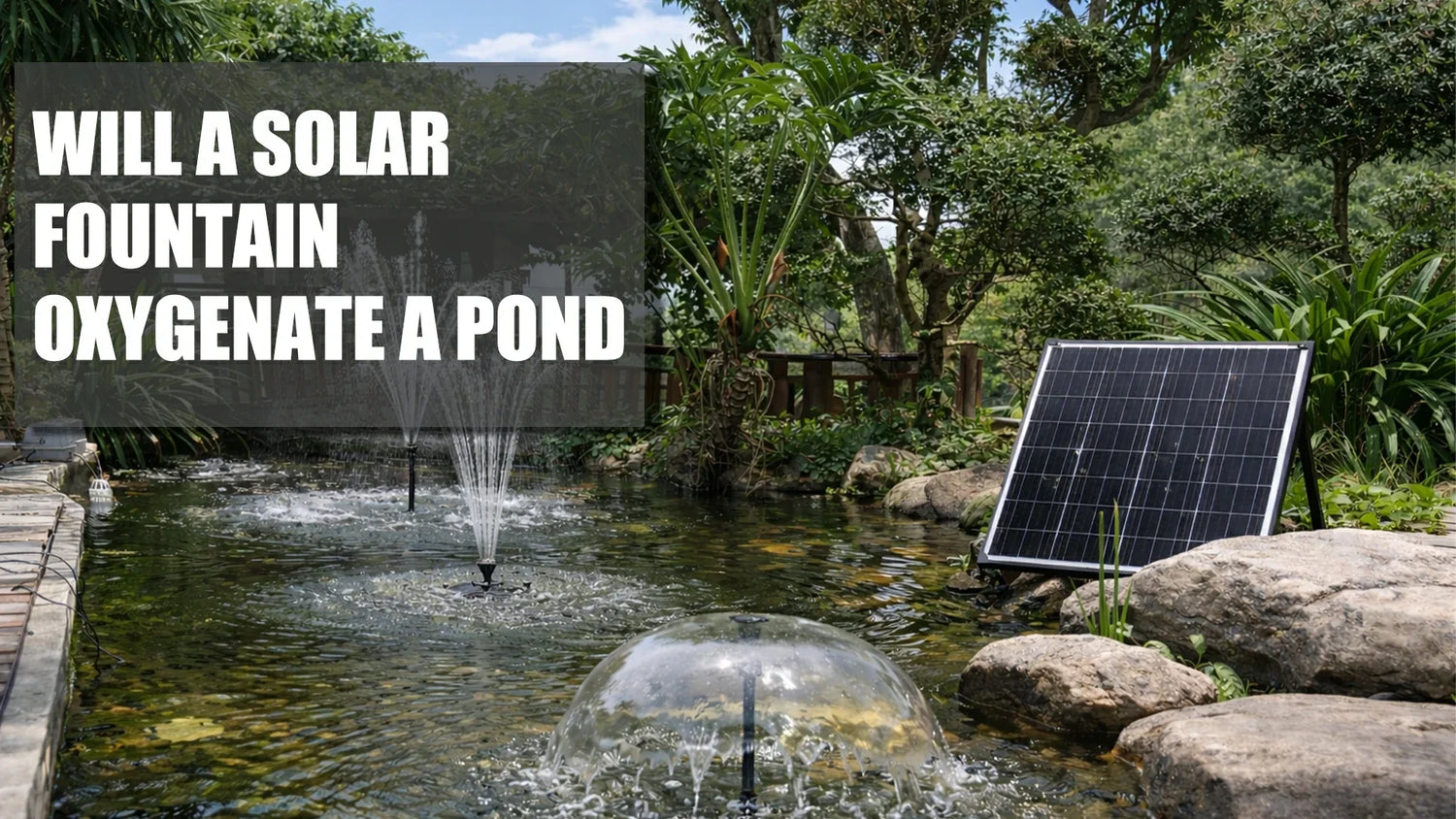
If you have ever seen fish gasping at the surface or algae starting to bloom in your pond, then you can be assured that oxygen—or rather, the lack of it—is probably the cause. Healthy ponds require consistent circulation of oxygen to support life, degrade waste, and maintain clear water. What would you do if you wanted a solution that was not just effective but also eco-friendly?
That's where many pond owners ask: Will a solar fountain oxygenate a pond?
Short answer: yes, a solar-powered fountain can add oxygen to your pond, but how well it does the job depends on its design, size, and how you deploy it. Let's delve a bit deeper into how fountains oxygenate water, what makes solar models such as Poposoap Solar Fountain Pumps ideal for small and medium ponds, and when you may need extra aeration support.
Why Oxygen Is Essential for a Healthy Pond

Oxygen is the unseen lifeblood of any pond ecosystem, supporting fish respiration, aiding useful bacteria that break down organic matter, and keeping harmful algae in check.
Poor aeration results in stagnant water layers: warm on top, oxygen-poor at the bottom. These result in foul odors, murky waters, and stressed aquatic life. Simply said, no matter how beautiful your pond may look, low oxygen will promptly turn it into an unhealthy one.
Regular circulation and water movement are the best ways to combat this, with fountains being one of the most natural-looking and efficient ways of keeping oxygen levels stable.
How Fountains Oxygenate a Pond
The process captures and mixes oxygen from the atmosphere when water shoots into the air and falls back into the pond. This process, so-called surface aeration, increases the gas exchange rate and allows oxygen to dissolve in the water.

Moreover, the movement produced by this fountain:
- Breaks up stagnant layers
- Prevents thermal stratification (temperature separation)
- Equidistribution of nutrients
- Creates light currents in the water, promoting biological balance.
So, yes, a fountain does add oxygen to a pond. The key is ensuring the water movement is consistent enough to reach deeper layers, not just the surface.
Can a Solar Fountain Oxygenate a Pond?
A solar-powered fountain uses sunlight to pump a small amount of water upwards, creating an oxygen exchange similar to that produced by an electric fountain.
The difference is in sustainability. A solar-powered system, like the solar fountain pump by Poposoap, requires no wiring or electricity. It works on clean solar energy and very often is complemented with a battery reserve for continuous work on cloudy days.
Solar fountains provide an ideal balance of aesthetics, functionality, and eco-conscious operation for small to medium-sized ponds. They are quiet, energy-free, and safe for wildlife—all the things a natural pond environment would need.
Solar Fountains vs. Traditional Aeration Systems
| Feature | Solar Fountains | Traditional (Electric) Aeration |
|---|---|---|
| Upfront Cost | Higher (panels & tech) | Lower (initial hardware) |
| Operating Cost | $0/month | ~$15–$30/month |
| Installation | Quick (no trenching) | Requires wiring/trenching |
| Pond Depth | 0–6 ft (effective) | Up to 50+ ft |
| Reliability | Weather-dependent | 24/7 rain or shine |
For example, traditional aerators, such as a diffused air system or electric fountains, work well but are more expensive to install and operate.
By contrast, solar fountains are:
- Cost-effective: No monthly electricity bill.
- Easy to install: no wiring, no trenching, and no professional setup.
- Eco-friendly: completely powered by sunlight.
- Whimsical touches: Add movement and shimmer to the surface of your pond.

Solar-powered fountains work best in ornamental or small ponds—only a few hundred gallons at most. Larger bodies of water, or those with heavy fish populations, will most likely still require additional aeration from diffusers or submersible air stones.
How to Maximize Oxygen from a Solar Fountain
Placement and maintenance are key for the best oxygenation from your solar fountain pump.
- Choose the right location. Place the solar panel in full sunlight for consistent operation.
- Change the height of the nozzle: Higher spray patterns increase surface agitation but might lead to loss through evaporation. Aim for a moderate height to balance beauty and efficiency.
- Clean the filter regularly. A clean pump operates stronger and circulates more water. Poposoap’s integrated filter box aides in keeping debris from reducing flow.
- Run it during peak daylight hours. This ensures optimal oxygenation when the pond's temperature - and oxygen demand - are highest.
- Add a battery backup. With the addition of the battery-enhanced models from Poposoap, continuing aeration into low light or evening hours can easily be maintained.
Best Solar Fountain Options for Pond Aeration
When selecting a solar fountain for oxygenation, consider the following:
- Adequate pump power for steady flow in the 6W–10W range.
- Adjustable nozzles for varied spray patterns.
- Built-in filtration to keep the water clean and assure a free flow of water.
- Battery backup for night or cloudy operation.
Poposoap Solar Fountain Pumps present all these attributes: compact and durable, circulating the water efficiently in ponds, birdbaths, and garden basins to support wildlife with clear, oxygen-rich water.
When to Add Extra Aeration Devices
While the solar-powered fountains are good for light-to-moderate aeration, you may need extra support if:
- Your pond is larger than 1,000 gallons
- You have many fish or plants competing for oxygen
- Water temperatures remain above 30°C (86°F) for long periods.
- You see bubbles, sludge, or fish near the surface
In such cases, integrate a solar fountain with either an air stone or a submersible aerator to ensure total water column circulation. Poposoap's modular solar systems easily accommodate such add-ons.
Signs Your Pond Needs More Oxygen
Watch for these red flags that your pond’s oxygen levels might be dropping:
- Fish gasping at the surface
- Cloudy or green water
- Unpleasant odors
- Thick algae growth
- Slow fish movements

With a solar fountain, you can quickly help restore balance by increasing surface agitation if you see these symptoms.
Conclusion - Solar Power for Cleaner, Healthier Water
It's more than just a decoration—the solar-powered fountain is an extremely practical tool for aeration, keeping your pond lively, well-balanced, and beautiful. With the use of renewable energy, you will not only save on electricity but also protect the natural balance of your outdoor space.
Be it a koi pond, wildlife habitat, or garden feature, the Poposoap Solar Fountain Pump ensures there is constant oxygenation, which this pump powers completely with the help of the sun. It's clean, quiet, and kind to your wallet and the Earth.
More reading on pond oxygenation: Can Pond Edge Plants Replace Oxygenators?

50W 360GPH Solar Water Fountain Pump
$149.99
Bring life to your pond or garden with this large 50W solar fountain pump. 360GPH flow, eco-friendly, perfect for outdoor ponds, bird baths, and water features.
FAQs — Solar Fountains and Pond Oxygenation
Yes, fountains mix surface and air, thereby increasing oxygen exchange naturally.
For small ponds, yes. In larger ones, combine with diffused aeration.
Solar fountains such as the Poposoap are highly efficient for small and mid-sized ponds and actually cost nothing to operate.
During daytime, especially midday, when the heat reduces natural levels of oxygen.
Yes, with a battery backup system. This feature is included in many Poposoap models.


Hinterlasse einen Kommentar
Alle Kommentare werden vor der Veröffentlichung geprüft.
Diese Website ist durch hCaptcha geschützt und es gelten die allgemeinen Geschäftsbedingungen und Datenschutzbestimmungen von hCaptcha.