

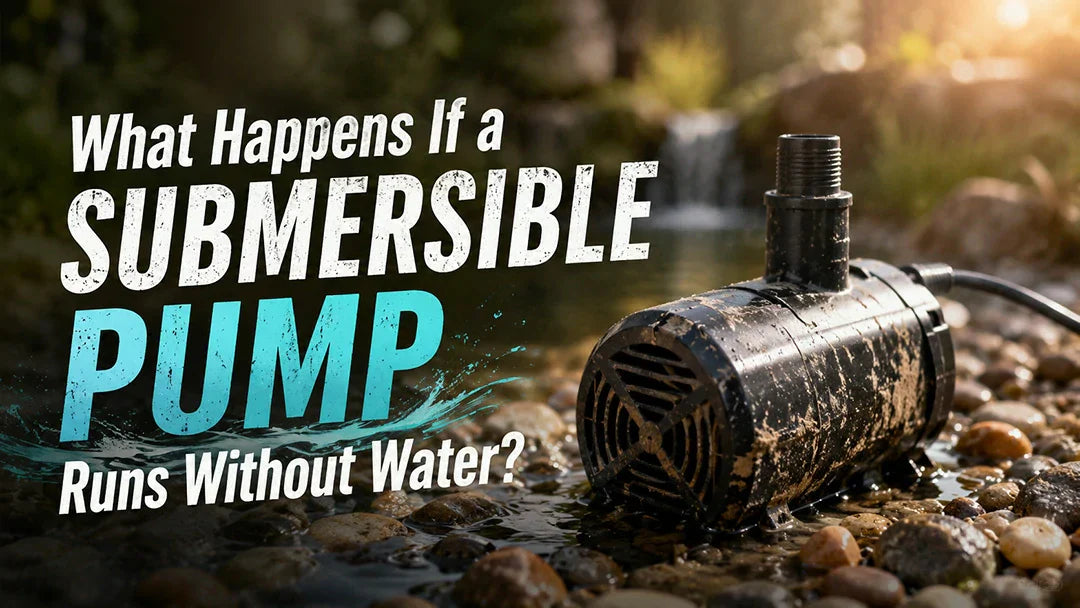
So what happens if a submersible pump runs without water? If you've got a pond or fountain, you've probably wondered about this at some point. Here's the deal: nothing good comes from it. When a submersible pump runs dry (we call it "dry running"), you're setting yourself up for some serious equipment damage. The kind that'll make you kick yourself for not checking those water levels.
Let's walk you through how these pumps actually work, what goes wrong when they run dry, and most importantly, how to stop it from happening in the first place.
How Does a Submersible Pump Work?

These pumps are designed to function fully underwater. They sit at the bottom of a water feature and constantly pull in water to keep everything flowing. You'll use these in fish ponds, small fountains, and tons of other water setups.
Why Water Matters So Much
Like any other pump, a submersible pump has a motor which drives the impeller — the spinning part that moves the water around. Two things happen when the pump is fully submerged in water:
- Cooling: Instead of air, water helps cool the motor by drawing heat away.
- Lubrication: Water keeps the internal seals and moving parts clean and friction-free.
What Happens When a Submersible Pump Runs Without Water?

We can all agree that a car motor requires coolant and oil to function smoothly, right? Your submersible pump is no different. Water is keeping the motor cool and all of the components lubricated.
When you dry run a submersible pump, it won't just stop and shut off. It will continue to run, causing it to overheat and break down.
Overheating and Motor Damage
Without surrounding water to cool things down, the motor temperature spikes within seconds. The internal components start to overheat. Insulation fails. Motor windings get damaged. If it continues to run, you're looking at a burnt motor. And this means a full replacement, which is far from fun.
Seal and Bearing Failure
The seals in your submersible pump require water to stay lubricated. When they run dry, friction heats them up fast. The seals can then warp, crack, and even completely fail. Once the seals are gone, corrosion creeps into the pump. The pump's bearings suffer too, grinding against each other while running without water.
Cavitation Damage
When the pump is attempting to push air instead of water, cavitation happens. These are tiny air bubbles that form and then collapse instantly inside the chamber of the pump. This damages the impeller and causes that annoying grinding or clicking noise you notice.
Impeller and Shaft Wear
The impeller spins to push the water through the pump. No water means it's rubbing directly against other components. This wears everything out faster and could eventually seize the whole pump.
How Long Can a Submersible Pump Run Without Water?
Not long. We're talking seconds to minutes, depending on the pump model. Some fail almost immediately. Others might hang on for a few minutes before serious damage happens. Even if it is running dry for a few minutes, it will shorten your pump's lifespan.
It's not worth risking it. If you think your submersible pump is running dry, shut it off immediately.
How to Use a Submersible Pump Properly
The most important thing that can't be stressed enough is that your submersible pump needs to be fully underwater. Here are some ways you can protect it from dry running.
Monitor Your Water Levels
This is your top priority. Keep an eye on your water levels, especially when it's hot out. Water evaporates faster than you think. If the water level drops below where your pump intake sits, you've got a problem.
Install a Float Switch or Sensor
These gadgets are something every water feature owner needs to have. They automatically cut power to your pump when the water gets too low. It's an affordable safety feature that pays for itself the first time it saves your pump.
Keep the Intake Clear
Stuff like leaves, algae, and other gunk can easily block your submersible pump intake. This stops water from flowing through it, even when it is fully submerged. Give the pump and filter a good clean every couple of weeks.
Check for Leaks
Water will slip out through cracks in the basin or from tubing that is loose. It can be easy to miss since the flow change is so small. Over time, these slow leaks will cause low water flow and damage the pump entirely.

Choose a Pump with Built-In Protection
Some newer submersible pumps come with dry run protection built right in. Instead of installing a separate float switch or low water sensor, you can get a pump that already includes it. These are a game changer when it comes to protecting your water feature.
The Poposoap Advantage
Speaking of protection, Poposoap's fountain pump collection includes models designed with built-in safety features to avoid dry-running damage. The solar-powered fountain pumps are eco-friendly, simple to set up, and very reliable. Plus, you get several options for spray patterns!
No matter what water feature you're working with, these pumps take the guesswork out of fountain maintenance.

Keep Your Submersible Pump Happy and Your Water Flowing
Submersible pumps are far from complicated. They just need water to do their job. Overheating, seal failure, cavitation — all of these go away when you keep your pump fully submerged and clear of debris.
Poposoap makes it easy to keep your water features running without the headache. Their solar-powered fountain pumps work great in garden ponds, birdbaths, and water features of all sizes. Skip the toolbox and just enjoy your pond.
Want to See Real Results?
Curious about how Poposoap pumps perform in actual use? Check out this detailed review of our submersible underwater filter pump. You'll see real user experiences, installation tips, component breakdowns, and how the filtration system keeps water crystal clear.

P3203 20W 280GPH Solar Pond Filter Fountain
$119.99
Clean and oxygenate your pond with this 20W solar pond filter pump. Eco-friendly 280GPH flow ideal for small to medium backyard water features.
Frequently Asked Questions
1. What Size Submersible Pump Do I Need?
Don't make your pump work overtime. Pick one that matches your water feature's pump capacity. A pump that's too small will struggle. One that's too large wastes power and doesn't circulate water properly.
2. How Can I Tell If My Pump Is Running Dry?
Listen for weird grinding or clicking noises. Watch for weak or inconsistent water flow. Feel the pump housing — if it's unusually hot, shut it down immediately.
3. Do All Submersible Pumps Need to Be Fully Underwater?
Yes. This is what they are designed for. Partial submersion doesn't give the pump enough cooling or lubrication. Keep the entire pump body below the water line.

Hinterlasse einen Kommentar
Alle Kommentare werden vor der Veröffentlichung geprüft.
Diese Website ist durch hCaptcha geschützt und es gelten die allgemeinen Geschäftsbedingungen und Datenschutzbestimmungen von hCaptcha.