
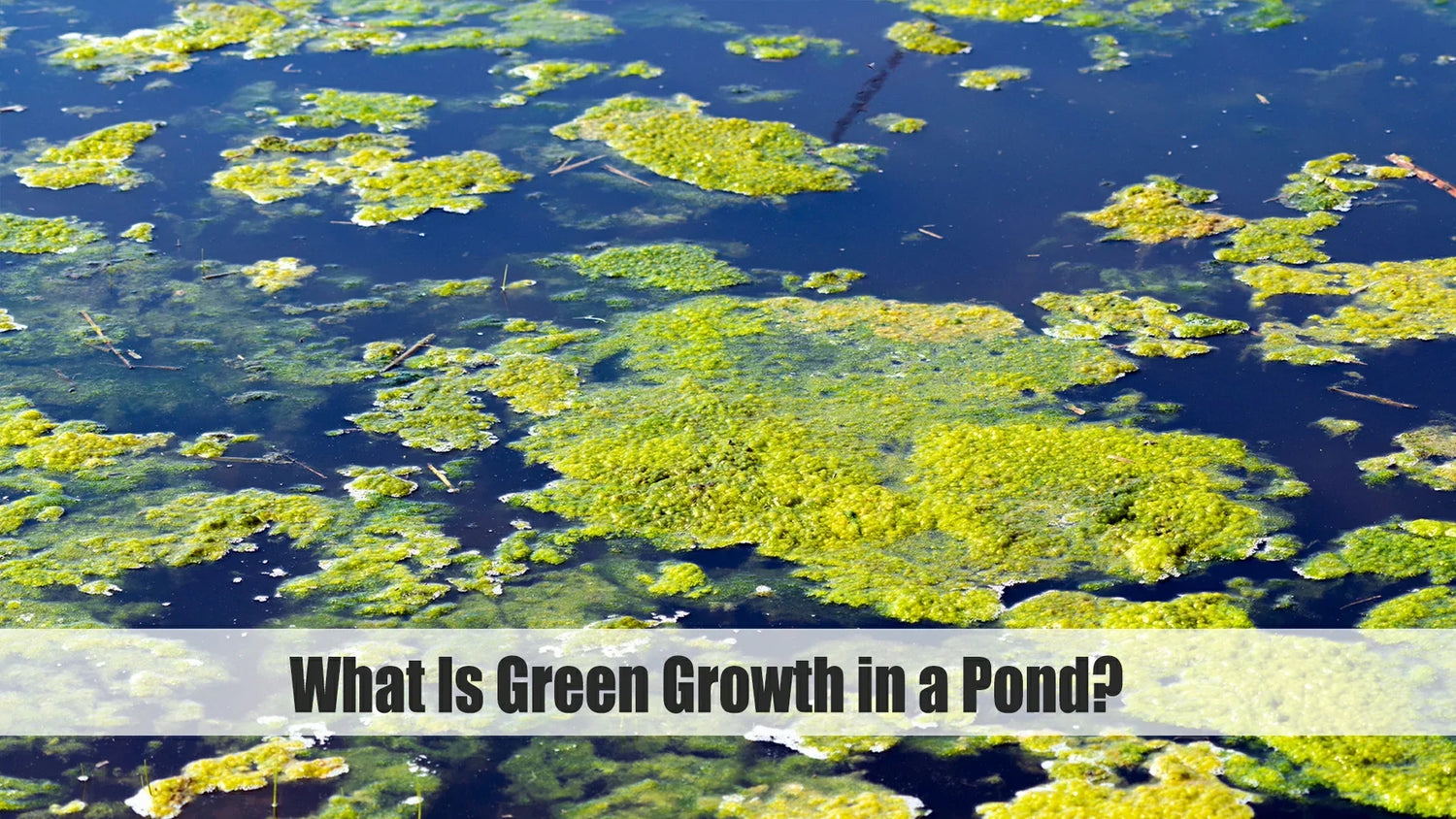
Every pond owner eventually faces the same question: Why is my pond turning green? Whether it's a compact backyard water feature or a larger pond filled with fish and aquatic plants, sudden green water, or a slippery film on surfaces, can make the pond feel neglected. The reassuring part is that "green growth" is one of the most common-and fortunately one of the easiest-pond issues to resolve. You can restore clear, healthy water much faster than you might expect by learning what triggers it, recognizing the various types of algae, and using natural control methods.
Many homeowners prevent stagnation and achieve strong oxygen circulation-air exchange with moving-water solutions such as Poposoap solar fountains, pond filters, and waterfall kits. Both are crucial environmental controlling factors for algae growth and also align with Poposoap's ecological product principles.
This article will take you through all you need to understand about green growth in ponds: what it is caused by, the forms it takes, and the most effective long-term strategies to ensure that your pond stays balanced and clean.
Introduction – What Does “Green Growth” Mean in a Pond?
"Green growth" describes the visible appearance of algae - a natural organism found in all freshwater ponds. A little algae is normal and even helps; it manufactures oxygen, feeds microorganisms, and supports the food chain. But when algae becomes excessive, the water may turn cloudy, green, or develop thick mats on the surface.
Most of the time, green growth is a sign of an imbalanced pond ecosystem linked to high nutrients, stagnant water, or heavy sunlight exposure. That's why most modern pond systems use active water circulation—such as solar-powered pumps and waterfall kits—to avoid stagnation and maintain ecological stability in the water.
Causes of Green Growth in Ponds

Many factors lead to algae bloom in ponds, including:
Excess Nutrients (Nitrogen & Phosphorus)
These nutrients come from:
- Fish waste
- Uneaten fish food
- decaying plants
- Fertilizer runoff
High nutrient levels feed algae growth rapidly.
Stagnant or Low-Oxygen Water
Without proper water movement, algae will begin to thrive while beneficial bacteria suffer.
Poposoap solar fountains and pond filters support oxygen circulation and limit stagnation.
Too Much Sunlight
Direct sunlight fuels photosynthesis that allows green algae to grow rapidly, particularly in shallow ponds.
Warm Temperatures
Algae love warm, still water; thus, they bloom quickly in summer.
Lack of Filtration
Waste builds up without mechanical and biological filtration, feeding algae growth.
Types of Green Growth (Algae) in Ponds
Not all pond green algae is alike, and identification of the type will help determine the appropriate course of action.
Green Water (Planktonic Algae)

-
- Water is pea-souped in appearance
- Caused by free-floating algae
- Nutrient spikes often trigger this.
- Filtration and water movement are required for control
String Algae (Hair Algae)

-
- Long, thread-like strands
- Grows on rocks, edges and waterfall surfaces
- Thrives in moving water with high sunlight
Slime Algae (Film Algae)

-
- Forms slippery layers on pond walls
- Generally harmless but indicative of nutrient imbalance
Surface Scum Algae

-
- Thin green layer on top of still water
- Usually caused by stagnant zones with poor circulation
Circulation and biological activity are improved with Poposoap's pumps and filters, which are essential for managing all forms of algae.
Is Green Growth (Algae) Bad for a Pond?
Algae are not inherently bad; in truth, they are a natural constituent of a healthy pond ecosystem and support food chains.
However, too much algae can lead to problems, such as:
- Cloudy green water
- Reduced oxygen levels
- Stress on fish
- Bad smells
- More rapid accumulation of sludge and waste
- Sunlight blocked for aquatic plants
A balanced pond has a controlled amount of algae, in conjunction with proper aeration, filtration, and water movement.
Natural Ways to Control and Kill Algae in a Pond

You can kill the algae in a pond without resorting to harsh chemicals. Many times, the most natural, ecosystem-friendly methods work even better for the long term.
-
Improve Water Circulation
Algae grow in stagnant water.
Solar fountains and waterfall kits help maintain oxygen and prevent stagnation. Poposoap’s designs focus on ecological water movement aligned with sustainable pond care.
-
Add a Pond Filter System
Mechanical filtration removes debris.
Biological filtration supports beneficial bacteria, which compete for nutrition with algae.
The Poposoap pond filter kits use multi-stage filtration media to support this process.
-
Introduce more aquatic plants.
Plants utilize the same nutrients that algae feed on, thereby naturally reducing algae growth. Good choices include:
- Water lettuce
- Water hyacinth
- Submerged plants such as hornwort
-
Shade the Pond
Reduce sun exposure through floating plants or shading structures.
-
Regular Removal of Organic Waste
Skim leaves and clean debris, then prune dying plant material.
-
Use Beneficial Bacteria
These bacteria break down excess nutrients and keep algae in check.
Long-term Prevention of Green Algae in Ponds

Preventing recurring green growth in ponds requires regular maintenance.
-
Keep Water Moving Continuously
Solar-powered pumps, waterfalls, and circulators maintain oxygen flow and inhibit algae blooms.
-
Avoid Overfeeding Fish
uneaten food becomes nutrient waste and feeds algae.
-
Clean Filters Consistently
A clogged filter loses its biological effectiveness.
-
Add Plants Strategically
Plants compete with algae for nutrients.
-
Protect the Pond from Fertilizer Runoff
Fertilizer from the garden entering a pond ensures quick algae blooms.
-
Employ multi-stage filtration systems
The Poposoap filter boxes and pond filter kits promote ecological water management by incorporating biological media, foam pads, and unique protective designs that minimize clogging and preserve beneficial bacteria.
Conclusion – Keeping Your Pond Clear and Healthy
Algae growth is a natural component of pond life, while excessive algae are indicative of an imbalance. By acknowledging the causes, identifying the type of algae, and controlling them with noninvasive natural methods sympathetic to ecosystems, clarity can be restored and a thriving pond maintained.
With thoughtful maintenance and employing eco-focused solutions such as Poposoap solar fountains, pond filters, and waterfall kits, you will be able to manage algae growth and maintain a pond that is healthy, clear, and attractive throughout the year.
READ MORE: Improving Pond Ecology with Poposoap Solar Pond Fountain

P3203 20W 280GPH Solar Pond Filter Fountain
$119.99
Clean and oxygenate your pond with this 20W solar pond filter pump. Eco-friendly 280GPH flow ideal for small to medium backyard water features.
FAQs About Green Growth and Algae in Ponds
The most common triggers are excess nutrients and too much sunlight.
Poposoap solar fountains are specifically designed to support oxygenation and consistent movement, improving pond ecology without requiring electricity.
No. A small amount of algae is healthy and part of a natural ecosystem.
Possibly-but it is considerably quicker and more stable with the aid of circulation, filtration, and nutrient management.

Hinterlasse einen Kommentar
Alle Kommentare werden vor der Veröffentlichung geprüft.
Diese Website ist durch hCaptcha geschützt und es gelten die allgemeinen Geschäftsbedingungen und Datenschutzbestimmungen von hCaptcha.