

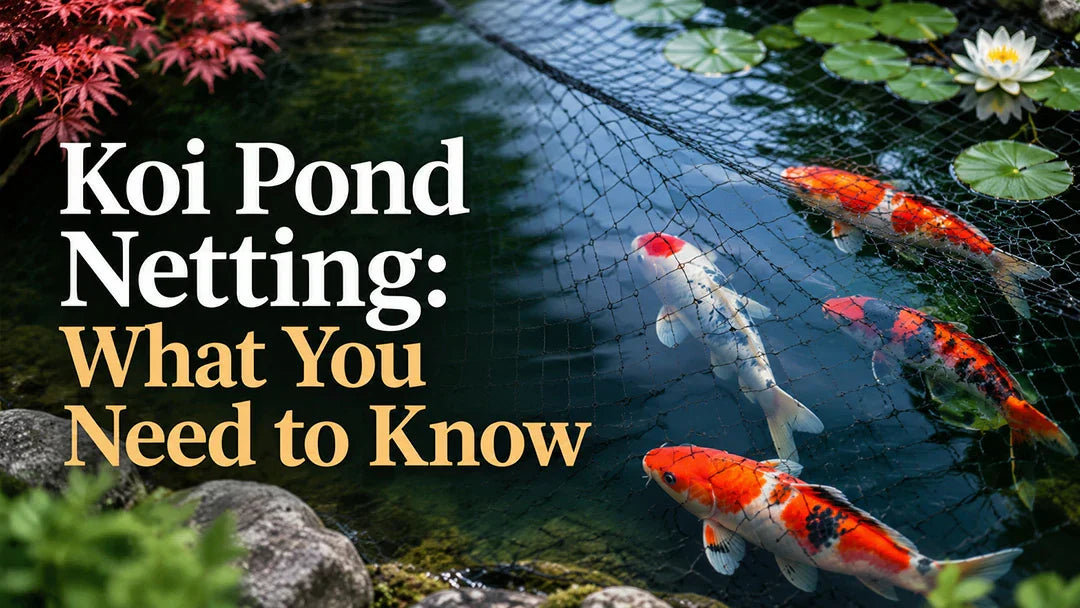
Teichnetze gehören zu den Dingen, bei denen man immer denkt, man kümmert sich später darum. Solar-Springbrunnenpumpen sind aufregender. Ihre Fische sind faszinierender. Ihre Pflanzen sind interessanter. Doch Sicherheit ist das, was am meisten zählt.
Die meisten Menschen denken erst an Teichnetze, wenn es zu spät ist – wenn sie einen Fisch verloren haben oder übermäßig viel Zeit mit dem Entfernen von Laub verbracht haben. Im folgenden Artikel sprechen wir über alles Wichtige rund um das Thema Teichnetze.
Was ist ein Teichnetz und warum ist es so wichtig?
Ein Teichnetz ist ein Schutzgitter, das Sie über Ihren Teich spannen. Es lässt Sonnenlicht, Sauerstoff und Regen hindurch. Zudem dient es als Sicherheitsbarriere zwischen Ihren Fischen und der Außenwelt.

Schutz vor Schädlingen
Vögel wie Reiher sind sehr geschickte Jäger. Sie können über lange Zeit völlig regungslos verharren. Sobald sie einen Fisch entdecken, stoßen sie schnell zu. Tatsächlich ernähren sich Reiher hauptsächlich von Fischen und Amphibien.
Ein Koi-Teichnetz verhindert, dass ein Vogel in den Teich gelangt und Ihre Fische fängt. Es verletzt den Vogel nicht. Es hindert ihn lediglich daran, in Ihren Teich einzudringen.
Laub und Ablagerungen unter Kontrolle halten
In den Teich fallendes Laub mag harmlos erscheinen. Sobald die Blätter jedoch im Wasser liegen, beginnen sie zu verrotten und geben Abfallstoffe (zersetzendes Pflanzenmaterial) ab. Dies erhöht den Ammoniakgehalt (eine giftige Stickstoffverbindung) in Ihrem Teich.
Teichnetze fangen den Großteil des Laubs ab, bevor es in den Teich gelangt. Das erleichtert Ihnen die Arbeit.
Verhindern, dass Fische herausspringen
Koi können springen, besonders während der Fütterung oder Laichzeit. Ein sicher befestigtes Netz minimiert das Risiko, dass Fische herausspringen. Dies ist besonders bei flachen Teichen entscheidend.
Zusätzliche Sicherheitsebene
Ein Netz gilt nicht als Sicherheitsabdeckung. Es kann jedoch als zusätzliche Barriere dienen, um Haustiere oder Kinder vom Teich fernzuhalten.
Arten von Teichnetzen und die richtige Wahl
Es gibt verschiedene Arten von Teichnetzen. Die Wahl hängt von Ihrem Standort und der Teichform ab.
Leichte Laubschutznetze

Diese Art von Netz ist leicht und dünn. Dadurch lässt es sich einfach entfernen und lagern.
Am besten geeignet für:
- Die herbstliche Laubsaison
- Vorübergehende Installation
- Kleine Teiche
Nachteile: Es ist möglicherweise nicht robust genug, um schweren Angriffen durch Raubtiere standzuhalten.
Robuste Koi-Teichnetze

Diese Art von Netz ist dick und stabil. Dadurch werden Risse und Dehnungen minimiert.
Am besten geeignet für:
- Gebiete, in denen Reiher vorkommen
- Koi-Teichanlagen
- Ganzjährige Installation
Dieses Netz sollte so gewählt werden, dass Vögel abgehalten werden, aber dennoch Luft zirkulieren kann.
Netzsysteme mit erhöhtem Rahmen

Manche Menschen entscheiden sich dafür, ihren Teich mit einem einfachen Rahmen abzudecken. Dieser sorgt dafür, dass das Netz über dem Wasserspiegel bleibt.
Vorteile:
- Verhindert, dass das Netz durchhängt
- Verhindert, dass Ablagerungen auf den Teichboden sinken
- Erhöht die Langlebigkeit
Dieses System ist ideal für größere Koiteiche.
So decken Sie einen Teich mit einem Netz ab: Schritt-für-Schritt-Anleitung
Falls Sie sich fragen, wie man einen Teich mit einem Netz abdeckt, folgen Sie diesen Schritten:
- Sorgfältig messen. Messen Sie Ihren Teich an der längsten und breitesten Stelle. Rechnen Sie etwas Puffer für die Verankerung hinzu. Wenn Ihr Teich geschwungen ist, sollten Sie ebenfalls etwas mehr einplanen, um Spannungsprobleme zu vermeiden.
- Die richtige Maschenweite wählen. Kleinere Maschen verhindern, dass Raubtiere an Ihre Fische gelangen. Größere Maschen können notwendig sein, um Laub fernzuhalten. Große Lücken sollten vermieden werden, da Vögel durch erstaunlich kleine Öffnungen greifen können.
-
Ränder sichern. Sie können folgende Materialien verwenden, um die Ränder des Netzes zu sichern:
- Erdanker
- Heringe für Gartenfolien
- Schwere Steine
- Randklemmen
- Nach Möglichkeit anheben. Wenn das Netz direkt auf dem Wasser liegt, kann das Laub unter dem Netz versinken. Es wird daher empfohlen, das Netz für eine bessere Leistung leicht erhöht zu montieren.
- Regelmäßig kontrollieren. Nach starkem Regen oder Wind kann das Netz durchhängen oder reißen. Es empfiehlt sich daher, das Netz regelmäßig auf Schäden zu untersuchen.

Wartungstipps und häufige Fehler bei Koi-Teichnetzen
Koi-Teichnetze sind ein großartiges Produkt für Koiteiche, aber wie bei jedem anderen Produkt gibt es auch hier Wartungstipps und häufige Fehler bei der Verwendung.
Wartungstipps
- Entfernen Sie wöchentlich das Laub, das sich im Netz verfangen hat.
- Überprüfen Sie das Netz nach einem Sturm.
- Lagern Sie das Netz nach Ende der Saison ein.
- Ersetzen Sie das Netz, wenn es beschädigt ist.
Häufige Fehler
- Das Netz zu locker installieren. Das Netz könnte Tiere einklemmen oder Raubtiere nicht aufhalten, wenn es nicht straff gespannt ist.
- Die Wasserqualität vernachlässigen. Das Netz kann unerwünschte Materialien aus dem Teich fernhalten, reinigt aber nicht das Wasser. Die Wasseraufbereitung bleibt wichtig.
- Das Netz als einzige Sicherheitsmaßnahme verwenden. Es ist erwähnenswert, dass die Verwendung eines Netzes die organische Belastung im Wasser reduziert, die Wasserqualität jedoch weiterhin vom Filtersystem abhängt. Die Poposoap-Filterserie kann Sie dabei unterstützen, Schwebstoffe im Wasser zu bewältigen. Somit bietet die Verwendung des Netzes ein schützendes Gleichgewicht.
Fazit
Ein Teichnetz mag auf den ersten Blick keinen großen Einfluss auf den Schutz des Teiches haben, aber wie in diesem Artikel dargelegt, spielt es eine bedeutende Rolle. Daher ist die Verwendung eines Netzes für Teiche von großer Bedeutung, da es hilft, die Abfallmenge im Wasser zu reduzieren.
Unabhängig von der Art des verwendeten Netzes – ob leichtes Laubschutznetz oder robustes Koi-Teichnetz – ist der Installationsprozess von entscheidender Bedeutung. Es lohnt sich daher, bei der Anbringung des Teichnetzes sorgfältig vorzugehen, wie hier besprochen.
Poposoap ist der Meinung, dass ein schöner Teich nicht bedeuten sollte, dass er schwer zu pflegen ist. Daher bietet die Verwendung eines Teichnetzes ein schützendes Gleichgewicht.
Wenn Sicherheit Ihr nächstes Anliegen ist, können Sie den folgenden Artikel lesen, der das Thema kindersichere Teichgestaltung ausführlich behandelt: Leitfaden für kindersicheres Teichdesign.

P3203 20W 280GPH Solar-Teichfilter-Springbrunnen
119,99 $
Reinigen und mit Sauerstoff anreichern Sie Ihren Teich mit dieser 20W Solar-Teichfilterpumpe. Umweltfreundlicher Durchfluss von 280 GPH, ideal für kleine bis mittelgroße Wasserspiele im Garten.
Häufig gestellte Fragen
1. Ist ein Teichnetz für das ganze Jahr erforderlich?
Nein, ein Teichnetz ist nicht das ganze Jahr über notwendig. Manche Teiche benötigen es nur für einen Teil des Jahres.
2. Kann das Teichnetz die Koi im Wasser verletzen?
Ja, ein Teichnetz kann Koi verletzen. Die Fische könnten gegen das Netz drücken.
3. Verhindert das Netz, dass Sonnenlicht in den Teich gelangt?
Das Netz lässt Sonnenlicht und Regen hindurch. Die Maschenweite bestimmt, wie viel Licht durchkommt.
4. Hält das Teichnetz Raubtiere ab?
Es reduziert die Gefahr durch Raubtiere erheblich.



Hinterlasse einen Kommentar
Alle Kommentare werden vor der Veröffentlichung geprüft.
Diese Website ist durch hCaptcha geschützt und es gelten die allgemeinen Geschäftsbedingungen und Datenschutzbestimmungen von hCaptcha.