

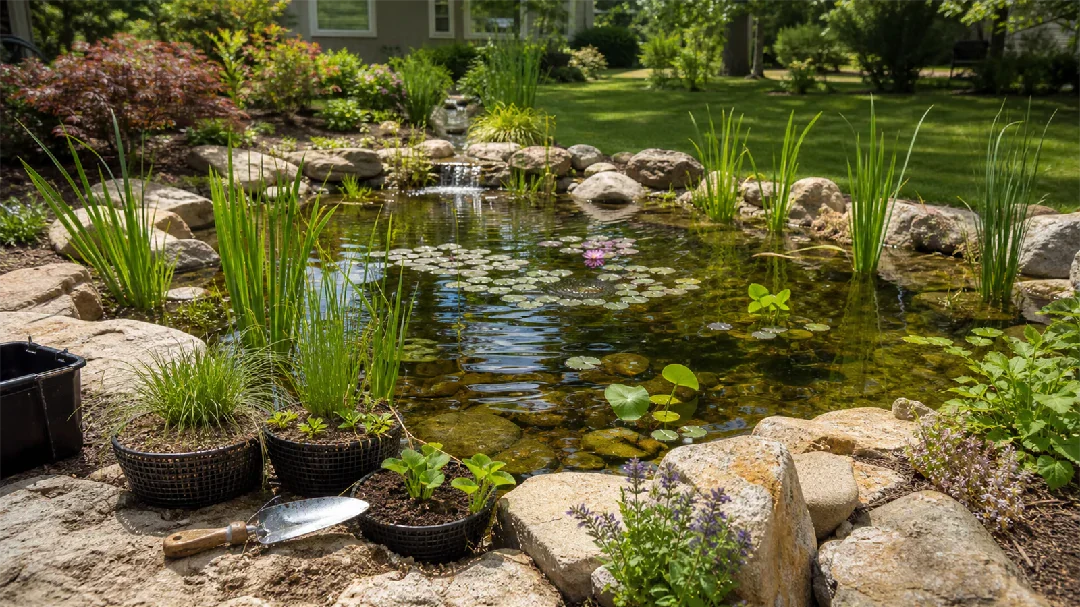
Als ich zum ersten Mal meinen eigenen Teich bepflanzte, stellte ich mir vor, etwas Ähnliches zu tun, wie ich es schon oft im Garten gemacht hatte – Samen säen.
Doch schon bald merkte ich, dass das nicht ganz richtig war und nicht alles gut ausging. Einige Pflanzen gingen verloren. Andere wuchsen nicht.
Warum? Ich fand heraus, dass das Geheimnis beim Züchten von Teichpflanzen darin liegt, ihre Zonierung zu verstehen. Wenn Sie das wissen, wird es Ihnen viel leichter fallen. Außerdem erfahren wir, wie man mit dem Pflanzen von Wasserpflanzen beginnt und welche Pflanzen am besten für Anfänger geeignet sind.
Verstehen Sie die verschiedenen Pflanzzonen des Teichs
Zunächst einmal ist es wichtig zu verstehen, dass es im Teich getrennte Pflanzzonen gibt.
Teiche bestehen nicht aus der gleichen Wassertiefe. Es gibt verschiedene Wachstumsbereiche, von denen jeder für eine bestimmte Pflanzenart geeignet ist.

Randzone: Flachwasserbereiche
Dies sind die Bereiche des Teichs, die dem Ufer am nächsten liegen. Sie sind entweder flach oder mit feuchter Erde gefüllt.
Die Pflanzen für Teichränder gehören zur gleichen Kategorie wie diejenigen, die man am Ufer verwendet.
Beispiele hierfür sind:
- Sumpfpflanzen
- Kleine Gräser
Sumpfzone
Hier ist das Wasser etwas tiefer als in der vorherigen Zone. Die Wurzeln wachsen unter Wasser, aber die Blätter befinden sich immer über dem Wasserspiegel.
Solche Pflanzen verleihen der Landschaft zusätzliche Struktur und ermöglichen es Ihnen, den Teich organisch mit dem Rest des Gartens zu verbinden.
Tiefwasserzone
Dies ist der zentrale Teil des Teichs.
Die Pflanzen hier schwimmen auf dem Wasser oder ihre Wurzeln befinden sich im Wasser.
Das Hinzufügen eines Teichwasserfalls zur natürlichen Teichgestaltung kann die visuelle Attraktivität der Tiefwasserbereiche steigern und gleichzeitig für eine sanfte Bewegung im gesamten Teich sorgen.
Warum ist Zonierung wichtig?
Eine falsche Platzierung innerhalb der Zonen führt zum Scheitern.
Es reicht aus, die richtige Tiefe zu finden, und dann haben sich alle Probleme erledigt.
Wann sollte ich mit dem Bepflanzen meines Teichs beginnen?
Die Hauptvoraussetzung hierfür ist eher die Wassertemperatur als das Kalenderdatum.
Frühling: Die beste Zeit zum Pflanzen
Der Frühling ist die am besten geeignete Jahreszeit für die Bepflanzung von Teichen.
Das Wasser wird wärmer und die Pflanzen beginnen mit ihrem aktiven Wachstum.
So haben sie genügend Zeit, Wurzeln zu schlagen und sich an die Veränderungen anzupassen, bevor die Hitze kommt.
Sommer und Frühherbst
Eine Bepflanzung ist auch in diesen Zeiträumen möglich. Es kann jedoch aufgrund instabiler Wassertemperaturen im Sommer zu Schwierigkeiten kommen.
Im Frühherbst verlangsamt sich das Wachstum. Daher benötigen die Pflanzen möglicherweise mehr Zeit, um sich an den Teich zu gewöhnen.
Winter: Nicht geeignet
Die Kälte verhindert jegliche Entwicklungsprozesse bei jungen Pflanzen. Die Wahrscheinlichkeit, dass sie absterben, steigt erheblich.
Wie Sie Ihre Teichwasserpflanzen einpflanzen
Der Vorgang selbst lässt sich mit einfachen Regeln beschreiben.

Verwenden Sie Behälter
Fast alle Teichpflanzen müssen in Behälter gesetzt werden.
Dies hilft, die Wurzeln zu regulieren und erleichtert das Umpflanzen der Pflanzen.
Wählen Sie die richtige Erde
Verwenden Sie nur schwere Erde ohne Düngemittel.
Andernfalls können die Pflanzen davonschwimmen oder für trübes Wasser sorgen.
Verwenden Sie die richtige Pflanztiefe
Jede Pflanze hat ihre eigene optimale Wachstumstiefe im Wasser.
Einige benötigen nur wenige Zentimeter. Andere benötigen deutlich mehr Wasser.
Prüfen Sie daher vor dem Pflanzen immer die erforderliche Tiefe.
Sorgen Sie für eine gute Wasserzirkulation
Stehendes Wasser wirkt sich negativ auf das Wachstum von Teichpflanzen aus.
Um eine gute Zirkulation zu gewährleisten, benötigen wir eine Pumpe und einen Filter.
Alternativ kann die Verwendung spezieller Geräte wie Poposoap Solar-Springbrunnenpumpen dabei helfen, die Wasserzirkulation aufrechtzuerhalten.
Pflanzen für Teichränder
Wenn Sie zum ersten Mal solche Wasserpflanzen in den Teich setzen, wählen Sie einige der einfachsten Sorten.

Zum Beispiel:
- Kleine Sumpfpflanzen
- Niedrig wachsende Wasserpflanzen
- Winterharte Randpflanzen
Häufige Fehler von Anfängern beim Bepflanzen von Teichen

Das Problem bei der Teichbepflanzung liegt hauptsächlich in diesen Faktoren:
Nichtbeachtung der Pflanzzonen
Es ist leicht, willkürliche Entscheidungen darüber zu treffen, wo Pflanzen platziert werden sollen.
Beachten Sie jedoch, dass es sehr wichtig ist, die Tiefe und die Pflanzenarten zu berücksichtigen.
Zu viele Pflanzen auf einmal einsetzen
Die Notwendigkeit, alles auf einmal zu pflanzen, kann einen unerfahrenen Menschen verwirren.
Versuchen Sie nicht, sofort alle Pflanzen hinzuzufügen. Fangen Sie damit an, die Ergebnisse zu testen.
Die Wasserqualität nicht beachten
Gute Bedingungen setzen sauberes Wasser voraus.
Daher sind Aspekte wie Wasserzirkulation und -filtration wichtig, da die Pflanzen andernfalls Probleme bekommen.
Sich nur auf die Auswahl der Pflanzen konzentrieren
Die Wahl der Pflanzen allein ist nicht das Wichtigste bei der Bepflanzung von Teichen.
Es ist genauso wichtig, das Wasser sauber zu halten und für eine gute Zirkulation sowie die richtige Zonierung zu sorgen.
In manchen Fällen kann die Verwendung eines Filtersystems wie Poposoap helfen.
Fazit
Wie Sie sehen, ist die Bepflanzung eines Teichs nicht schwer, wenn man die Grundprinzipien versteht. Alles hängt vom Verständnis der Zonen, dem richtigen Zeitpunkt und der fachgerechten Pflanzung ab.
Beginnen Sie also mit ein paar kleinen Pflanzen. Geben Sie sich die Möglichkeit, den natürlichen Wachstumsprozess zu beobachten.
Ein Gerät wie Poposoap kann hilfreich sein, um die Zirkulation aufrechtzuerhalten.

SPF326 20W 280GPH Solar-Teichfilter-Springbrunnen
119,99 $
Reinigen und oxygenieren Sie Ihren Teich mit dieser 20W Solar-Teichfilterpumpe. Umweltfreundlicher 280GPH-Durchfluss, ideal für kleine bis mittelgroße Wasserspiele im Garten.
FAQ
Wann sollte ich mit dem Bepflanzen meines Teichs beginnen?
Der Frühling ist die beste Zeit zum Pflanzen.
Kann ich meine Pflanzen im Sommer einsetzen?
Ja. Sie sollten jedoch vorsichtig sein, da die Temperatur schnell schwanken kann.
Sollte ich meine Teichpflanzen in Behälter setzen?
Auf jeden Fall! Das erleichtert das Pflanzen.
Was sind die besten Pflanzen für Teichränder?
Sumpfpflanzen und Wasserpflanzen sind gut für Anfänger geeignet.

Hinterlasse einen Kommentar
Alle Kommentare werden vor der Veröffentlichung geprüft.
Diese Website ist durch hCaptcha geschützt und es gelten die allgemeinen Geschäftsbedingungen und Datenschutzbestimmungen von hCaptcha.