

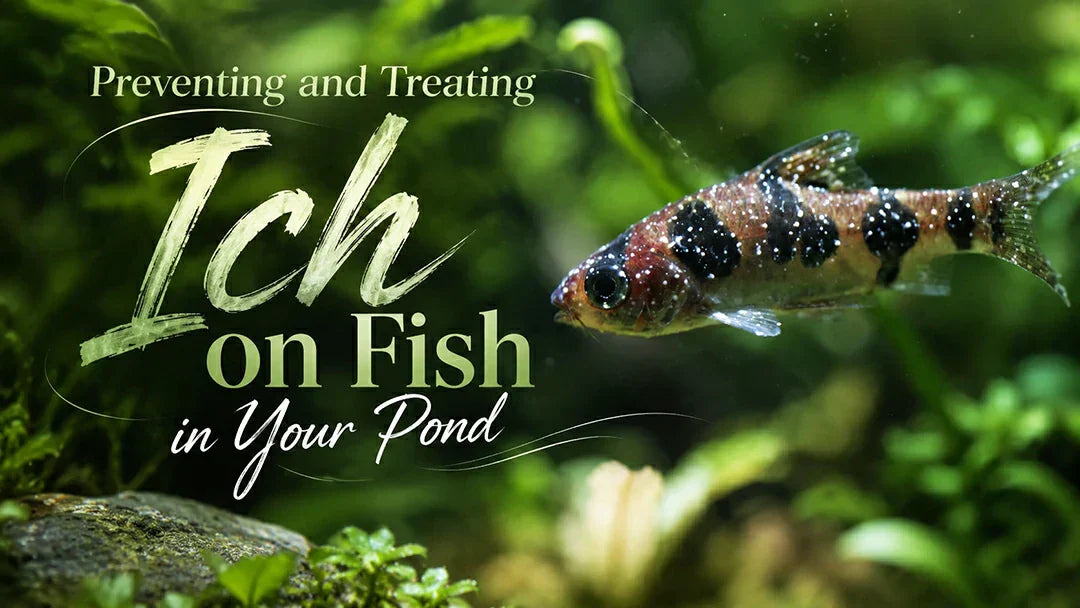
Die Weißpünktchenkrankheit (Ich) gilt als eine der häufigsten Krankheiten bei Fischen in Gartenteichen. Die Krankheit ist hoch ansteckend und kann innerhalb kurzer Zeit viele Fische befallen. Das erste Anzeichen von Ich sind meist kleine weiße Punkte, und als Teichbesitzer ist es völlig normal, beunruhigt zu sein. Die gute Nachricht ist jedoch, dass Ich bei Fischen bei rechtzeitiger Behandlung geheilt werden kann. Dieser Artikel erläutert, was Ich ist, wie man es erkennt, was die Ursachen sind und wie es sicher behandelt und verhindert werden kann. Dies ist wichtig, um sowohl Goldfische als auch Koi sicher zu behandeln, da beide anfällig für Stress sind.
Was ist Ich und warum ist es ein Problem für Teichfische und Koi?

Der Begriff Ich ist auch als Weißpünktchenkrankheit bekannt. Die Ursache für Ich ist ein mikroskopisch kleiner Parasit namens Ichthyophthirius multifiliis. Laut der University of Florida IFAS Extension gilt Ich als einer der häufigsten Parasiten, die Süßwasserfische befallen. Der Parasit ist hoch ansteckend und kann in einem geschlossenen Teichsystem schnell andere Fische infizieren.
Der Parasit hat einen Lebenszyklus. Er gräbt sich in die Haut des Fisches ein und ernährt sich von ihm. Danach lässt sich der Parasit in das Teichwasser fallen und vermehrt sich. Nach der Fortpflanzung schwimmen die Parasiten umher, um einen neuen Wirt zu finden.
Der Teich ist ein Nährboden für Ich. Die Parasiten befinden sich alle im selben Wasser. Das bedeutet, wenn ein Fisch infiziert ist, sind alle anderen Fische gefährdet. Koi sind besonders anfällig, da sie in größeren Gruppen gehalten werden und viel Futter erhalten. Das bedeutet, dass sie viele Abfallprodukte erzeugen. Je mehr Abfälle produziert werden, desto schlechter ist die Wasserqualität.
Stress ist ein Hauptfaktor. Ein plötzlicher Temperaturwechsel, Überbesatz oder unzureichende Wasserfiltersysteme schwächen das Immunsystem, also das körpereigene Abwehrsystem. Sobald die Immunabwehr geschwächt ist, nutzt der Parasit die Situation aus.
Wie man Ich-Symptome bei Fischen frühzeitig erkennt

Häufige Ich-Symptome bei Fischen
Das erste und offensichtlichste Anzeichen von Ich bei Fischen ist das Auftreten weißer Punkte. Diese weißen Punkte ähneln Salzkörnern. Sie erscheinen auf den Flossen, dem Körper und den Kiemen der infizierten Fische. Die Symptome können jedoch bereits auftreten, bevor sich die weißen Punkte entwickeln. Zu den Symptomen, die vor dem Erscheinen der weißen Punkte auftreten können, gehören:
- Scheuern des Körpers an Steinen, auch bekannt als „Flashing“
- Angelegte Flossen
- Schnelle Atmung
- Aufenthalt nahe der Wasseroberfläche
- Appetitlosigkeit
Die Symptome, die vor dem Auftreten der weißen Punkte auftreten, sind die häufigsten Anzeichen von Ich bei Fischen.
Wenn die Kiemen infiziert sind, wird die Atmung der Fische beschwerlich. Die infizierten Fische können sich außerdem unruhig verhalten und sich von der restlichen Gruppe isolieren.
Warum die frühzeitige Erkennung der Symptome so wichtig ist
Es ist einfacher, die Krankheit zu behandeln, wenn sich der Parasit im freischwimmenden Stadium befindet. Sobald der Parasit den Körper des Fisches infiziert hat, wird er resistent gegen das Medikament. Erst wenn der Parasit den Körper zur Vermehrung verlässt, wird das Medikament wirksam.
Was verursacht Ich-Ausbrüche in Teichen?
Plötzliche Temperaturveränderungen
Ich infiziert den Fischbestand meist im Frühjahr und Herbst. Dies sind die Zeiten, in denen sich die Wassertemperatur plötzlich ändert. Das Wasser kann durch einen plötzlichen Kälteeinbruch abkühlen, was die Immunität der Fische beeinträchtigt. Der Parasit vermehrt sich zudem schneller, wenn das Wasser warm ist. Die Lebensdauer des Parasiten ist bei warmem Wasser kürzer.
Schlechte Wasserqualität
Ein hoher Ammoniak- und Nitritgehalt verursacht bei den Fischen Stress. Die Fische, die vom Parasiten befallen werden, leben in instabilem Wasser.
Überbesatz
Wenn zu viele Fische auf begrenztem Raum leben, erhöht dies den Kontakt zwischen ihnen. Koiteiche sind oft übervölkert. Dies erhöht das Risiko für Ich bei Koi während stressiger Perioden.
Einsetzen neuer Fische ohne Quarantäne
Wenn neue Fische in den Teich eingesetzt werden, können sie Parasiten tragen, auch wenn sie gesund aussehen. Ohne Quarantäne wird der Parasit auf den gesamten Fischbestand übertragen.
Einfache Quarantänemaßnahmen minimieren das Risiko, dass Parasiten in Ihren Teich gelangen, erheblich.
Wie man Ich bei Fischen sicher und effektiv behandelt
Schritt 1: Diagnose bestätigen

Bevor Sie mit der Behandlung Ihrer Fische gegen Ich beginnen, stellen Sie sicher, dass die Symptome mit der Weißpünktchenkrankheit übereinstimmen. Nicht alle weißen Punkte sind Ich.
Wenn Sie unsicher sind, wenden Sie sich an einen Teichspezialisten.
Schritt 2: Wasserbedingungen sofort verbessern

Gute Wasserbedingungen sind notwendig, um die Genesung Ihrer Fische zu unterstützen. Testen Sie Ihr Wasser auf Ammoniak und Nitrit. Wechseln Sie bei Bedarf das Teichwasser.
Erhöhen Sie den Sauerstoffgehalt in Ihrem Teichwasser. Warmes Wasser enthält weniger Sauerstoff als kaltes Wasser.
Zusätzliche Wasserbewegung hilft, den Sauerstoffgehalt zu erhöhen. Das Poposoap Wasserfall-Set verbessert die Wasserzirkulation.
Gute Wasserbedingungen tragen dazu bei, den Stress für Ihre Fische während der Behandlung zu minimieren.
Schritt 3: Empfohlene Medikamente verwenden

Es gibt viele kommerziell erhältliche Mittel gegen Ich. Lesen Sie die Anweisungen auf dem Etikett sorgfältig durch.
Die meisten Behandlungen müssen über mehrere Tage wiederholt werden, um sicherzustellen, dass der gesamte Lebenszyklus der Parasiten abgetötet wird.
Entfernen Sie Aktivkohle, falls Ihr Filter diese verwendet. Aktivkohle ist ein chemischer Filter, der das Medikament absorbiert.
Schritt 4: Weiterhin beobachten
Beenden Sie die Behandlung nicht zu früh. Auch wenn Ich verschwunden scheint, können noch freischwimmende Parasiten vorhanden sein.
Beobachten Sie das Verhalten Ihrer Fische, bis sie sich wieder normal verhalten.
Wie man Ich bei Fischen langfristig vorbeugt
Stabile Wasserqualität aufrechterhalten
Eine gute Wasserzirkulation sowie leistungsstarke Wasserfiltersysteme sind sehr wichtig, um eine stabile Wasserqualität aufrechtzuerhalten. Dies hilft, Stress zu vermeiden, der das Immunsystem schwächen kann.
Regelmäßige Wartung kann plötzliche Ammoniakanstiege verhindern.
Schnelle Temperaturwechsel vermeiden
Schnelle Temperaturschwankungen können das Risiko von Ich bei Fischen erhöhen.
Alle neuen Fische in Quarantäne setzen
Neuzugänge im Teich sollten mindestens zwei Wochen lang unter Quarantäne gestellt werden, bevor sie in den Teich eingesetzt werden.
Überbesatz reduzieren
Weniger Überbesatz kann dazu beitragen, die Ausbreitung von Ich bei Fischen zu verhindern.
Bei der Vorbeugung von Ich bei Fischen geht es mehr um Prävention als um Behandlung. Zu wissen, wie man Ich bei Fischen vorbeugt, kann dazu beitragen, schwerwiegendere Folgen zu verhindern.
Fazit
Ich bei Fischen ist hoch ansteckend, kann aber kontrolliert werden, wenn die Symptome früh genug erkannt werden. Die Vorteile von sauberem Wasser, guter Wasserzirkulation und stabilen Wassertemperaturen können nicht genug betont werden.
Wenn es darum geht, wie man Ich bei Koi loswird, ist es wichtig zu beachten, dass Stress die Hauptursache für Ich bei Koi ist.
Poposoap-Systeme können helfen, die Wasserzirkulation zu verbessern, was wiederum die Umgebung im Teich optimiert.
Poposoap – gestalten Sie Ihren Wassergarten in 10 Minuten.
Weitere Einblicke in Solar-Springbrunnen für Teiche mit Filtersystemen finden Sie hier: The New Favourite of Aquarium Enthusiasts.

P3203 20W 280GPH Solar-Teichfilter-Springbrunnen
119,99 $
Reinigen und belüften Sie Ihren Teich mit dieser 20W Solar-Teichfilterpumpe. Umweltfreundlicher Durchfluss von 280GPH, ideal für kleine bis mittelgroße Wasserspiele im Garten.
Häufig gestellte Fragen
1. Wie schnell breitet sich Ich aus?
Es kann sich innerhalb weniger Tage durch das gemeinsame Wasser verbreiten.
2. Kann Ich Koi töten?
Ja, das kann es, abhängig von der Schwere der Symptome.
3. Sollte ich den gesamten Teich behandeln?
Ja, es ist wichtig zu beachten: Wenn ein Fisch Symptome zeigt, ist es wahrscheinlich, dass auch andere infiziert sind.
4. Verhindert eine gute Wasserzirkulation das Auftreten von Ich?
Obwohl dies keine Garantie für eine Verhinderung ist, trägt es dazu bei, das Auftreten zu minimieren.


Hinterlasse einen Kommentar
Alle Kommentare werden vor der Veröffentlichung geprüft.
Diese Website ist durch hCaptcha geschützt und es gelten die allgemeinen Geschäftsbedingungen und Datenschutzbestimmungen von hCaptcha.