

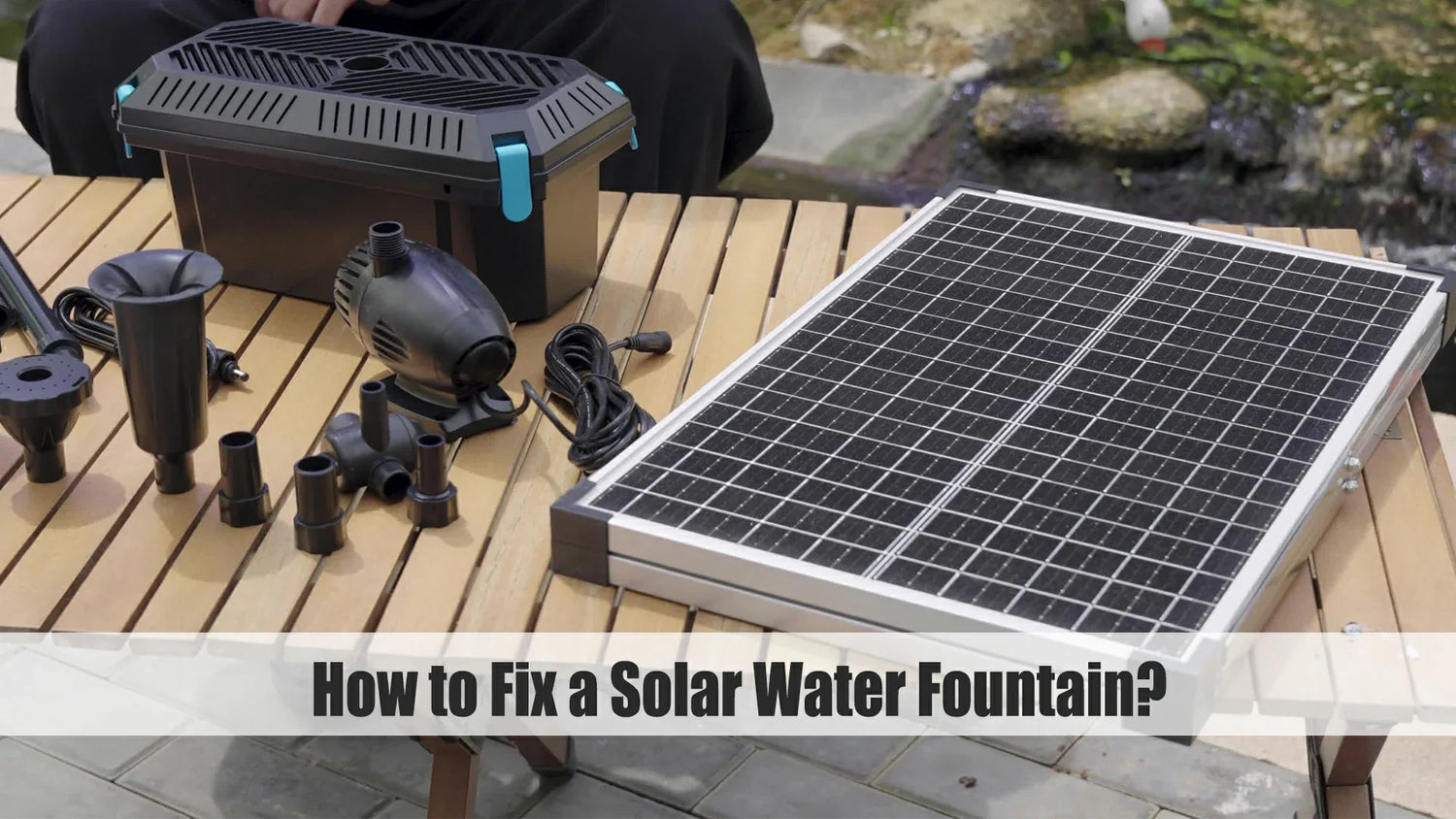
Tatsächlich belebt nichts einen Garten so sehr wie das sanfte Plätschern von fließendem Wasser – bis eines Tages Ihr Solarbrunnen einfach stehen bleibt. Vielleicht funktioniert die Pumpe nicht mehr oder der Wasserstrahl ist schwach geworden. Wenn Sie sich jemals dabei ertappen, nach „mein Solarbrunnen funktioniert nicht“ zu suchen, keine Sorge – Sie sind nicht allein.
Solarbrunnen sind alles in allem relativ einfache und empfindliche Systeme. Sie funktionieren mit Sonnenlicht, sauberem Wasser und normaler Wartung. Natürlich sind die Dinge im Allgemeinen ziemlich einfach zu beheben, sobald Sie wissen, wo Sie suchen müssen, es sei denn, etwas geht schief. In diesem Ratgeber führen wir Sie Schritt für Schritt durch die Reparatur eines Solarbrunnens, um zukünftige Probleme zu vermeiden und Ihren Garten weiterhin wunderschön plätschern zu lassen – dank Expertentipps, inspiriert durch das Produkthandbuch und die Markengeschichte von Poposoap.
Einführung – Warum Solarbrunnen nicht mehr funktionieren
Es ist eine gute Idee, bevor Sie mit dem Auseinanderbauen beginnen, zu verstehen, warum Solarbrunnen überhaupt aufhören zu laufen; die Gründe können von so einfachen Dingen wie Schatten bis hin zu so spezifischen Problemen wie einem verstopften Filter reichen.
Die häufigsten Ursachen sind:
- Es wird viel Sonnenlicht benötigt. Selbst Halbschatten oder Bewölkung lassen die Pumpe stocken.
- Verschmutzte Solarmodule: Staub oder andere Partikel blockieren das Sonnenlicht, das die Zellen erreicht.
- Verstopfter Pumpenfilter: Schmutz, Algen oder Blätter reduzieren den Wasserfluss.
- Niedriger Wasserstand: Wenn die Pumpe nicht vollständig untergetaucht ist, schaltet sie sich automatisch ab.
- Erschöpfte Batterie: Bei Modellen mit Ersatzakku muss eine leere Zelle möglicherweise einfach wieder aufgeladen werden.
- Verschlissener Motor oder Schäden: Der Motor könnte nach einiger Zeit abgenutzt oder blockiert sein.
Die meisten Probleme lassen sich in wenigen Minuten durch grundlegende Reinigung oder Anpassung lösen. Lassen Sie uns die genauen Schritte durchgehen, wie Sie Ihren Solarbrunnen reparieren können.
Wie man einen Solarbrunnen repariert: Eine Schritt-für-Schritt-Fehlerbehebungsanleitung
Schritt 1 – Sonnenlicht prüfen

Solarbrunnen benötigen direktes Sonnenlicht, kein gefiltertes oder schattiges Licht. Stellen Sie Ihr Solarmodul an einen Ort, der täglich mindestens 5–6 Stunden voll exponiert ist.
Wenn der Brunnen wieder funktioniert, nachdem Sie das Modul neu positioniert haben, haben Sie das Problem bereits gelöst.
Schritt 2 – Solarmodul reinigen

Eine Schicht aus Staub, Pollen oder Vogelkot kann die Leistung durch Blockierung des Sonnenlichts verringern.
Reinigen Sie die Oberfläche vorsichtig mit einem weichen Tuch oder Schwamm und mildem Seifenwasser; vermeiden Sie scheuernde Materialien, die das Modul zerkratzen könnten. Für maximale Effizienz empfiehlt Poposoap, das Solarmodul alle zwei Wochen zu reinigen.
Schritt 3 – Pumpe inspizieren und reinigen

Schalten Sie die Pumpe am Modul aus und nehmen Sie sie aus dem Wasser. Überprüfen Sie, ob Blätter, Algen oder andere Ablagerungen den Einlass blockieren.
Spülen Sie die Pumpe und die Düse mit sauberem Wasser ab. Wenn Ihr Brunnen einen Filterkasten hat, wie alle Poposoap-Modelle, öffnen Sie diesen und spülen Sie den Schwamm oder den Netzfilter darin aus, um Verstopfungen zu lösen.
Schritt 4 – Wasserbecken auffüllen

Ihre Pumpe muss jederzeit vollständig untergetaucht sein. Ein zu niedriger Wasserstand führt dazu, dass sie Luft ansaugt, was Geräusche verursachen oder zum Ausfall führen kann. Füllen Sie frisches, sauberes Wasser nach, bis die Pumpe vollständig unter Wasser liegt.
Schritt 5 – Batterie prüfen (bei Modellen mit Pufferbatterie)

Wenn die Solarpumpe Ihres Brunnens mit einer Batterie ausgestattet ist, muss diese möglicherweise einfach aufgeladen werden. Lassen Sie das Solarmodul einen ganzen Tag in der direkten Sonne stehen. Wenn es dann nicht funktioniert, muss die Batterie eventuell ausgetauscht werden. Die meisten Batterien halten 1,5 bis 3 Jahre.
Schritt 6 – Motor inspizieren

Wenn der Motor auch bei Sonnenlicht und nach der Reinigung nicht startet, versuchen Sie, das Laufrad – den kleinen Propeller im Inneren der Pumpe – mithilfe eines weichen Werkzeugs zu drehen. Es könnte durch kleine Ablagerungen blockiert sein.
Wenn es jedoch dauerhaft feststeckt oder rattert, ist es an der Zeit, es zu ersetzen. Poposoap bietet komplette Ersatzpumpensets für Solarbrunnen für einen einfachen Austausch an.
Schritt 7 – Verbindungen testen

Stellen Sie sicher, dass die Pumpe fest mit dem Modul oder der Batterieeinheit verbunden ist. Schlechte oder feuchte Verbindungen führen zu Leistungsverlust. Trocknen Sie alle Kabel, bevor Sie sie wieder anschließen.
Wenn keiner dieser Schritte das Problem löst, hat Ihre Pumpe wahrscheinlich das Ende ihrer Lebensdauer erreicht. Dies geschieht normalerweise nach 3 bis 5 Jahren, je nach Nutzung und Wartung.
Tipps zur vorbeugenden Wartung von Solarbrunnen
- Reinigen Sie Pumpe und Modul: Reinigen Sie regelmäßig die Solarmodule und spülen Sie den Filter einmal wöchentlich während Phasen mit hohem Pollenflug oder Algenbildung.
- Verwenden Sie gefiltertes oder destilliertes Wasser, da dies die Bildung von mineralischen Ablagerungen und Verstopfungen reduziert.
- Positionieren Sie das Solarmodul korrekt: Zur Sonne hin und fernab von Schatten.
- Vor Winter schützen: Entleeren Sie Ihren Brunnen bei Frost und lagern Sie die Pumpe im Innenbereich.
- Vermeiden Sie das Trockenlaufen. Stellen Sie sicher, dass der Wasserstand über dem Pumpeneinlass liegt.
Laut dem Produkthandbuch von Poposoap ist routinemäßige Wartung der beste Weg, die Lebensdauer jedes Produkts zu verlängern und es umweltfreundlich zu betreiben.
Wann man seine Solarbrunnenpumpe ersetzen sollte
Sogar die am besten gewarteten Brunnenpumpen nutzen sich irgendwann ab. Die Lebensdauer einer hochwertigen Solarpumpe, wie einem bürstenlosen DC-Modell von Poposoap, beträgt etwa drei bis fünf Jahre.
Es ist Zeit, Ihre Pumpe zu ersetzen, wenn Sie Folgendes bemerken:
- Sie schaltet sich bei hellem Sonnenlicht nicht ein.
- Der Wasserfluss bleibt nach der Reinigung schwach.
- Das Laufrad ist entweder kaputt oder macht beim Drehen ratternde Geräusche.
- Nach voller Sonneneinstrahlung hält sie die Ladung nicht mehr.
Der Austausch ist einfach: Trennen Sie die alte Pumpe ab, schließen Sie eine neue Poposoap-Solarpumpe an, tauchen Sie sie ins Wasser und verbinden Sie sie wieder mit dem Modul. Die meisten Modelle sind "Plug-and-Play" und starten sofort, sobald sie Sonnenlicht ausgesetzt sind.

Fazit – Bringen Sie Ihren Brunnen wieder zum Fließen
Die Reparatur eines Solarbrunnens ist nicht kompliziert. Meistens ist es ein Problem mit Sonnenlicht, Verschmutzung oder Ladung. Ein paar Minuten Pflege können den sanften Fluss Ihres Brunnens wiederherstellen und Ihren Garten wieder zum Leben erwecken. Befolgen Sie diese Anleitung und führen Sie die Wartung regelmäßig durch, dann wird Ihr Brunnen das ganze Jahr über effizient und umweltfreundlich laufen. Wenn es an der Zeit ist, Ihre Brunnenpumpe zu ersetzen, sorgt ein zuverlässiges Ersatzpumpenset von Poposoap dafür, dass Ihr Wasserspiel im Handumdrehen wieder wie neu funktioniert.

20W 280GPH Solarbrunnenpumpe
FAQs – Fehlersuche bei Solarbrunnenpumpen
Beginnen Sie zunächst mit dem Sonnenlicht und der Sauberkeit: Stellen Sie das Modul in direktes Sonnenlicht und reinigen Sie sowohl das Modul als auch die Pumpe.
Es könnte an teilweiser Verschattung oder einer schwachen Batterie liegen. Sorgen Sie für volle Sonneneinstrahlung und prüfen Sie, ob die Batterie ordnungsgemäß geladen wird.
Wenn das Gerät nach der Reinigung nicht startet, hat Ihr Motor wahrscheinlich sein Limit erreicht. Am besten ist es, ihn zu ersetzen.
Typischerweise 3–5 Jahre bei regelmäßiger Reinigung und Pflege.
Nein – falls das Modul Risse aufweist oder beschädigt ist, muss es komplett ausgetauscht werden. Poposoap bietet kompatible Solarmodule für die meisten ihrer Modelle an.

Hinterlasse einen Kommentar
Alle Kommentare werden vor der Veröffentlichung geprüft.
Diese Website ist durch hCaptcha geschützt und es gelten die allgemeinen Geschäftsbedingungen und Datenschutzbestimmungen von hCaptcha.