

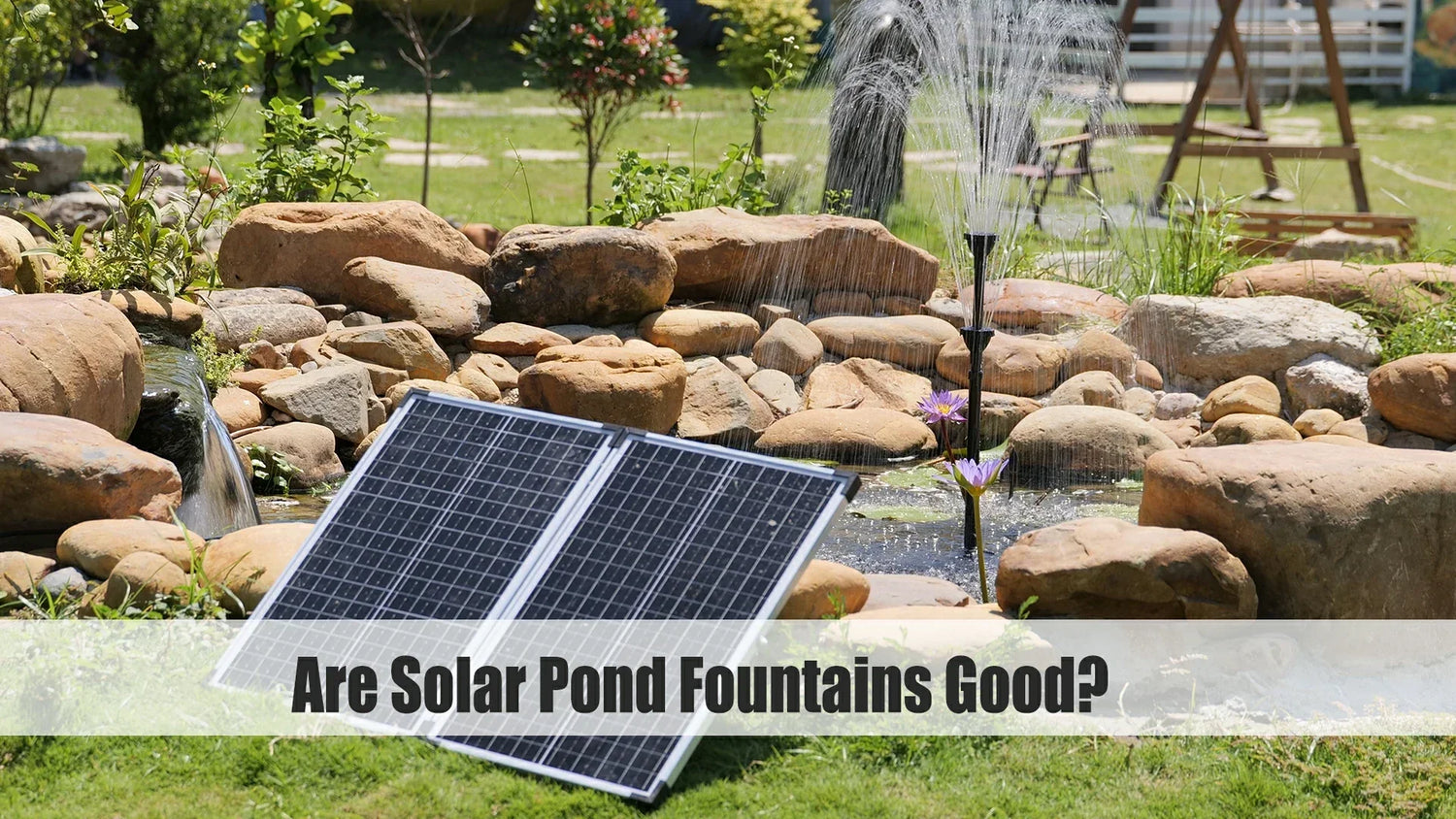
Wenn Sie schon länger davon träumen, Ihren Garten um ein beruhigendes Wasserspiel zu erweitern – das sanfte Geräusch plätschernden Wassers, das im Sonnenlicht glitzernde Wasser und Vögel, die zum Trinken landen –, sind Sie wahrscheinlich schon auf Solar-Teichpumpen gestoßen. Sie versprechen natürliche Schönheit, saubere Energie und keinerlei Betriebskosten. Doch für viele bleibt eine Frage offen: Taugen Solar-Springbrunnenpumpen etwas?
Kurz gesagt: Ja. Solar-Wasserspiele haben eine beachtliche Entwicklung vollzogen. Die heutigen Designs sind robuster, langlebiger und effizienter als je zuvor – insbesondere Modelle mit Batterie-Backup-Systemen, wie sie in der Solar-Springbrunnen-Serie von Poposoap erhältlich sind. Hier erfahren Sie detailliert, wie sie funktionieren, was Sie erwartet und warum sie das perfekte Upgrade für Ihren Garten sein könnten.
Einleitung — Der Aufstieg der Solar-Wasserspiele
In den letzten zehn Jahren haben sich Solar-Wasserspiele von einer speziellen Garten-Spielerei zu einem gefragten Öko-Luxusprodukt entwickelt. Gartenbesitzer wünschen sich die beruhigende Atmosphäre fließenden Wassers ohne die Kosten und Unannehmlichkeiten einer elektrischen Installation.
Solar-Springbrunnen erfüllen diesen Bedarf mithilfe von Sonnenlicht – einer unerschöpflichen und erneuerbaren Energiequelle –, um kleine, effiziente Pumpen anzutreiben. Fortschrittliche Modelle, wie die von Poposoap angebotenen, verfügen über hocheffiziente monokristalline Solarmodule und bürstenlose Motoren, die für eine stabile Leistung bei geringerem Wartungsaufwand sorgen. Die meisten enthalten mittlerweile auch integrierte Akkus, sodass Sie auch abends eine elektrische Wasserbewegung genießen können.
Wie funktionieren Solar-Teichpumpen?
Eine Solar-Teichpumpe funktioniert durch einen einfachen, aber fortschrittlichen Mechanismus. Das Solarmodul fängt die Sonnenstrahlen ein und wandelt sie in elektrische Energie um, die wiederum die Pumpe antreibt. Die Pumpe verteilt das Wasser über Düsen, erzeugt sprudelnde oder sprühende Effekte und reichert den Teich gleichzeitig mit Sauerstoff an.
Bei ausreichendem Sonnenlicht läuft die Pumpe mit sauberer Solarenergie. Wenn die Option eines Batterie-Backups vorhanden ist, wird die Energie tagsüber gespeichert, damit das System auch an bewölkten Nachmittagen oder am Abend betrieben werden kann, wenn die Sonne weniger stark scheint.

Solar-Springbrunnen von Poposoap sind „Plug-and-Play“ – keine Verkabelung, kein Stromnetz, einfach nur Sonnenlicht. Platzieren Sie sie an einem sonnigen Ort und sie bringen sofort Leben in jeden Teich, jedes Brunnenbecken oder Vogeltränke.
Sind Solar-Springbrunnenpumpen die beste Wahl? (Vor- und Nachteile)
Vorteile von Solar-Teichpumpen
- Umweltfreundliche Energie: Sie nutzen ausschließlich Solarkraft, was den CO2-Fußabdruck und die Stromrechnung reduziert.
- Einfache Installation: Kein Stromanschluss oder Verkabelung erforderlich.
- Wartungsarm: Robuste Motoren und Filterboxen bedeuten minimalen Wartungsaufwand.
- Sicher für Wildtiere: Niederspannung und ungiftiger Betrieb machen sie sicher für Fischteiche oder Vogeltränken.
- Kostengünstig: Solarenergie ist nach der Installation kostenlos – keine wiederkehrenden Kosten mehr.
Zu beachtende Nachteile
- Abhängigkeit vom Sonnenlicht: Die Leistung kann an bewölkten oder regnerischen Tagen abnehmen.
- Geringerer Druck: Solarpumpen eignen sich nur für kleine bis mittelgroße Teiche.
- Nachtbetrieb: Erfordert ein Batterie-Backup für den Betrieb bei Nacht.
Glücklicherweise eliminieren neue Technologien wie Poposoaps Solar-Springbrunnen mit Batterie-Backup die meisten Nachteile und kombinieren grüne Energie mit konstanter Leistung den ganzen Tag über.
Beste solarbetriebene Wasserspiele (Empfehlungen für 2025)
Wenn Sie auf Solarenergie umsteigen möchten, finden Sie hier einige Top-Optionen für 2025:
- Poposoap Solar-Teichpumpen- und Filter-Set – Hält das Wasser klar und gesund, während es mit Sonnenlicht betrieben wird. Ideal für Koiteiche und Garten-Wasserspiele.
- Poposoap Solar-Vogeltränken-Springbrunnen – Kompakt, tragbar und darauf ausgelegt, Vögel mit sanfter Wasserbewegung anzulocken.
- Poposoap Solar-Springbrunnenpumpe mit Batterie-Backup – Bietet auch an bewölkten Tagen einen stetigen Wasserfluss mit robuster Konstruktion für den ganzjährigen Einsatz.
Jedes Modell spiegelt die Designphilosophie von Poposoap wider: Die Kombination von umweltfreundlicher Technologie mit Ästhetik und Langlebigkeit.
So holen Sie das Beste aus Ihrem Solar-Springbrunnen heraus
Um Ihr Solar-Wasserspiel optimal zu nutzen:
- Platzieren Sie das Solarmodul in einem Bereich, der täglich mindestens sechs Stunden direktes Sonnenlicht erhält.
- Halten Sie das Modul frei von Blättern oder Staub.
- Reinigen Sie die Pumpe und die Filterbox regelmäßig, um Ablagerungen zu vermeiden.
- Verwenden Sie sauberes Wasser, um Algenbildung zu verhindern.
- Bei Modellen mit Batterie, lassen Sie diese in der vollen Sonne, um effektiv Energie zu speichern.
Wenn Sie diese einfachen Schritte befolgen – wie im Produkthandbuch von Poposoap beschrieben –, verlängert sich die Lebensdauer des Systems und der Wasserfluss bleibt kontinuierlich.
Vergleich: Solar- vs. elektrische Wasserspiele
Bei der Wahl zwischen elektrischen und solaren Wasserspielen ist es hilfreich, die grundlegenden Unterschiede in Betrieb und Anwendung zu kennen.
Solar-Wasserspiele nutzen ausschließlich sauberes Sonnenlicht. Sie verwenden Photovoltaikmodule als Energiequelle für die Pumpe, sind somit nach der Installation kostenlos und umweltfreundlich. Es sind keine elektrischen Kabel erforderlich, daher können sie überall installiert werden – selbst in den entlegensten Bereichen des Gartens, wo keine Steckdosen vorhanden sind. Sie arbeiten mit Niederspannung und sind sicher für Haustiere und Wildtiere.

Da Solar-Springbrunnen von der Lichtintensität abhängen, kann die Funktion bei Bewölkung oder Schatten variieren. Designs mit integriertem Batterie-Backup (wie bei Poposoap) speichern überschüssige Energie, sodass die Pumpe auch bei schwachem Sonnenlicht kontinuierlich läuft. Der Wartungsaufwand ist gering – gelegentliches Reinigen der Paneele und Auswaschen der Filter reicht meist aus.
Elektrische Wasserspiele hingegen beziehen Strom aus dem Netz. Sie bieten eine konstante Leistung bei jedem Wetter und zu jeder Tageszeit und können höhere Durchflussraten erzeugen, weshalb sie sich für große Teiche oder mehrstufige Wasserfälle eignen. Nachteilig sind Installationsprobleme wie die elektrische Verkabelung, Vorschriften und höhere laufende Energiekosten. Aufgrund der höheren Spannung bergen elektrische Einheiten zudem ein größeres Risiko für Wildtiere oder Kinder.

Generell lässt sich sagen, dass Solar-Springbrunnen durch Benutzerfreundlichkeit, Umweltfreundlichkeit und Kosteneffizienz überzeugen, während elektrische Springbrunnen reine Leistung und Dauerfunktion bieten. Solar-Springbrunnen sind für die meisten privaten Gartenteiche und kleine bis mittlere Teiche die praktischere und umweltfreundlichere Lösung – besonders dank aktueller Designentwicklungen wie denen von Poposoap.
FAQs — Alles, was Sie über Solar-Teichpumpen wissen müssen
F1: Funktionieren Solar-Teichpumpen auch für große Teiche?Sie eignen sich am besten für kleine bis mittlere Teiche. Für größere Systeme werden mehrere Solarpumpen oder ein Hybrid-Set verwendet.
F2: Funktionieren Solar-Springbrunnen auch nachts?
Solar-Springbrunnen mit eingebautem Akku, z. B. die von Poposoap, funktionieren auch nachts.
F3: Wie lange halten Solar-Springbrunnenpumpen?
Bei kontinuierlichem Betrieb etwa 3–5 Jahre oder länger, unter der Voraussetzung regelmäßiger Reinigung und Sonneneinstrahlung.
F4: Muss ich meinen Solar-Springbrunnen im Winter abbauen?
Ja, bei Frosttemperaturen. Reinigen Sie ihn, lassen Sie das Wasser ab und lagern Sie ihn bis zum Frühjahr drinnen.
F5: Sind Solar-Springbrunnen sicher für Pflanzen und Fische?
Ja. Die bürstenlosen Pumpen von Poposoap sind sicher für Wassertiere und arbeiten mit Niederspannung.
Fazit — Taugen Solar-Teichpumpen also etwas?
Tatsächlich. Solar-Teichpumpen waren früher kaum mehr als kleine Gartendekorationen, doch heute sind es leistungsstarke, umweltfreundliche Wasserspiele, die jeden Außenbereich zum Leben erwecken. Mit den batteriegestützten Solar-Springbrunnen von Poposoap genießen Sie kontinuierliche Wasserzirkulation, ein tierfreundliches Habitat und automatisierten Betrieb – alles angetrieben von der Natur.
Sie sind leise, schön und umweltfreundlich – der perfekte Weg, Lebendigkeit und Harmonie in Ihren Teich zu bringen, ohne jemals einen Anschluss ans Stromnetz zu benötigen.


Hinterlasse einen Kommentar
Alle Kommentare werden vor der Veröffentlichung geprüft.
Diese Website ist durch hCaptcha geschützt und es gelten die allgemeinen Geschäftsbedingungen und Datenschutzbestimmungen von hCaptcha.