

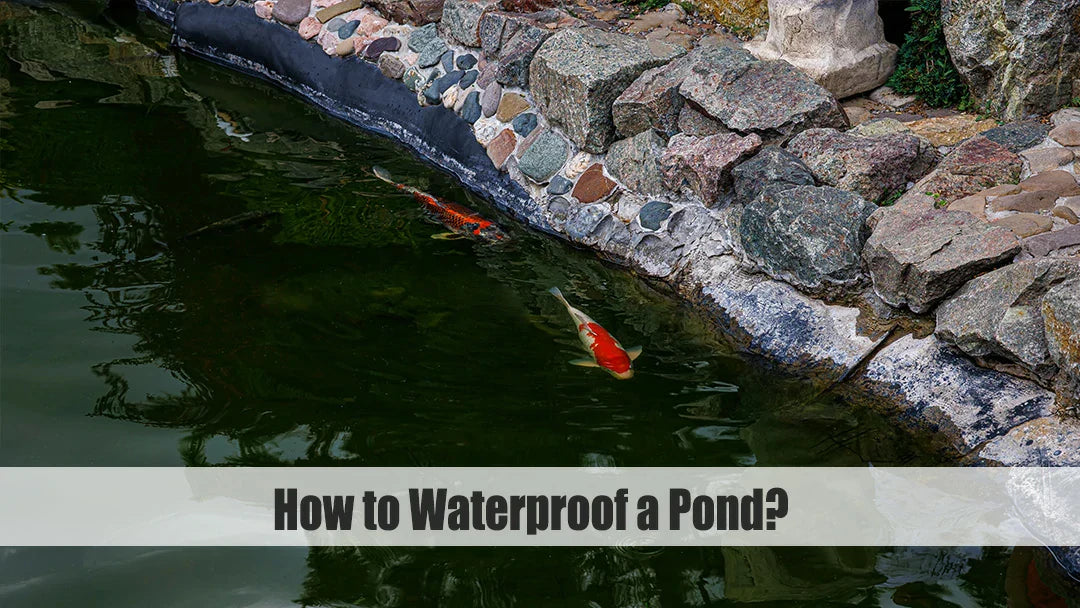
Introduction — Why Pond Waterproofing Matters
Most pond owners are not thinking about waterproofing when it is time for them to install a pond. They might be thinking of fish, plants, and/or pumps. They will worry about waterproofing afterward when something seems not quite right.
It began for me with frequent topping-offs of the pond. To start with, it was the heat. And then the wind. Later, it became apparent that it wasn't simply evaporating. Water was actually leaving.
This affects others in similar ways. Pumps work harder. Water quality fluctuates. Fish respond quicker than we do. This area may not be the most observable area in a pond, but it serves as the base for all other pond elements.
Understanding Pond Leaks and Waterproofing Basics

Just because water is being lost does not mean there is a leak. All ponds naturally lose water, especially during hot conditions or when the water surface is agitated.
Leaks behave differently. The level goes down to a point and stops. That point of stopping generally points to where the leak is.
Waterproofing is basically making a barrier between the pond itself and the soil around it. This barrier could be a lining, paint, or even clay, and its sole function is to keep the water contained so that all else works as it is supposed to.
Methods for Pond Leak Detection
Taking time is always preferable to using tools.
The very first step for me is to turn off all the pumps and waterfalls. This eliminates splash loss. I mark the water level and then let it be for a day.
If the water level drops to a lower point and then stabilizes at the same level every time, that's probably where the leak is located. Edges, shelving, where pipes exit the walls, and folds are all common trouble areas.
In some cases, the drip isn't actually a tear. It's just the way water seeps over the rim, as well as the pull exerted by soil and plant life.
How to Effectively Waterproof Your Pond
There is not a technique that works for every pond.
Flexible pond liners offer advantages in tolerating motion and irregular sites. Liquid sealants can be effective on concrete or hard surfaces, though the work has to be done slowly and patiently. Natural clay sealing methods can be effective under optimal site conditions and compaction.
Far more important than the approach is whether or not it suits your pond's shape and size. Rushed or wrong solutions are just more work down the line.
Step-by-Step Guide to Waterproof Your Pond Yourself
I always begin with stripping things back. The decorations, rocks, and debris must be cleared away so that you can assess what you're working with.
When you're setting up or adjusting the liner, always make certain the ground is smooth. Points of no particular consequence now might be working poorly and failing in the long run. The liner at the edges, if in excess, is not excess liner.
A liquid sealant requires patience. Thin coats of sealant take time to dry. Don't be tempted to just get it done today. Your patience will reward you with a good seal.
As soon as I refill the pond, I let it rest for a few days before turning any equipment back on. Monitoring water levels at this point avoids later problems.

Common Pond Sealing Errors (And How to Avoid Them)
The error I often witness is sealing the bottom but forgetting the edges. This is where leaks are most likely, not where the water is deepest.
Another consideration is the placement of large stones on top of liners. Over time, there will be areas of weakness.
Finally, waterproofing without thought to circulation means "hidden stress." Still areas increase pressure against liners and coatings. A gentle, constant flow of water eliminates the problem.
How to Keep a Waterproof Pond

An enclosed pond must also be maintained, but not constantly.
I check the edges during periods of heavy rain and cold weather. Small changes are easily corrected early on. Maintaining the trimming of plants near the rim prevents water from unintentionally being pulled out of the pond.
This will help keep a balanced force. This will help the sealant remain in good condition for a longer period of time.
READ MORE: What Are the Advantages of a Solar Water Pumping System?

10' x 10' 45mil EPDM Pond Liner
$139.00
10' x 10' EPDM rubber pond liner in durable 45 mil thickness. Flexible, UV-resistant, fish-safe liner for small pond builds and irregular water garden shapes.
FAQs — Pond Sealing and Waterproofing
No. Some loss is normal evaporation. A drop to a consistent level usually indicates a leak.
Properly installed and maintained systems can operate for several years before repair or replacement needs to be considered.

Hinterlasse einen Kommentar
Alle Kommentare werden vor der Veröffentlichung geprüft.
Diese Website ist durch hCaptcha geschützt und es gelten die allgemeinen Geschäftsbedingungen und Datenschutzbestimmungen von hCaptcha.