

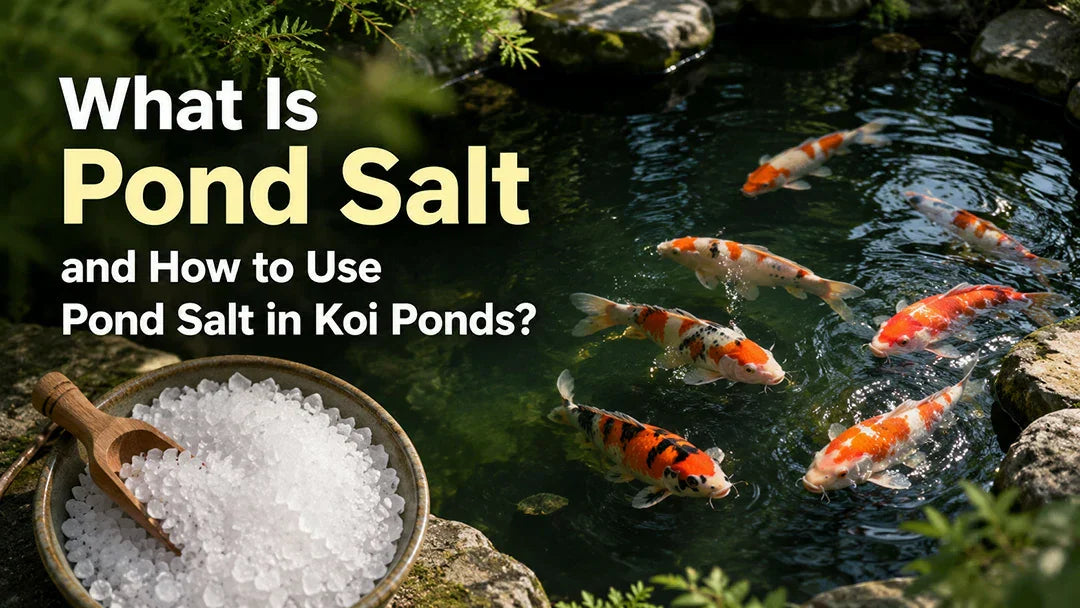
Viele Koihalter werden sich irgendwann die Frage stellen: Was ist Teichsalz und welchen Nutzen hat es in Koiteichen? Es stellt sich die Frage, ob man Salz in Koiteichen verwenden kann, und die ehrliche Antwort lautet: Manchmal kann man es, manchmal nicht. Es hängt alles von der Situation, der Menge und der korrekten Anwendung des Salzes ab. In diesem Ratgeber erfahren Sie, was Teichsalz ist, welchen Nutzen Salz in Koiteichen hat und wie Sie den Salzgehalt in Koiteichen ohne Verwirrung messen können.
Was ist Teichsalz und wie unterscheidet es sich von Speisesalz und Aquariensalz?
Teichsalz ist einfach normales Natriumchlorid. Es wird verwendet, weil es die einfachste Lösung ist und am wenigsten wahrscheinlich schädliche Auswirkungen hat. Es darf keine Nährstoffzusätze enthalten, wie zum Beispiel Jod, das manchmal als Nährstoffergänzung dient, oder Rieselhilfen, die ein Verklumpen des Salzes verhindern. Diese Zusätze sind in Speisesalz nützlich, aber nicht in Koiteichen. Die grundlegenden Unterschiede zwischen den dreien sind wie folgt:
- Teichsalz: Normales Natriumchlorid. Keine Zusätze. Das ist alles. Wird für Koiteiche und andere Wasseranwendungen verwendet.
- Speisesalz: Enthält Zusätze. Verwenden Sie es nicht. Es wird Ihren Kois schaden.
- Aquariensalz: Ebenfalls normales Natriumchlorid. Es ist in Ordnung, aber teuer.

Verwenden Sie kein Streusalz oder Auftausalz. Diese enthalten andere Zusätze, die nicht in Ihren Koiteich gelangen sollten.
Wenn Sie also vorhaben, Ihrem Koiteich-Pflegeprogramm Salz hinzuzufügen, stellen Sie sicher, dass Sie reines Teichsalz oder sauberes Aquariensalz wählen. Lesen Sie das Etikett des Salzes, das Sie verwenden möchten. Wenn es außer reinem Salz noch andere Inhaltsstoffe enthält, wählen Sie es nicht.
Warum sollte man Salz im Koiteich verwenden? Den Salzgehalt im Koiteich und sichere Werte verstehen

"Salz ist kein tägliches Vitamin." Salz ist eher wie ein Werkzeug im Werkzeugkasten. Es wird verwendet, wenn es benötigt wird. Es kann in Stresssituationen helfen.
Koi sind Süßwasserfische. Salz ist in ihrem Körper vorhanden. Durch Osmose dringt Wasser in den Koi ein – Wasser bewegt sich durch die Haut und die Kiemen des Kois. Salz reduziert diesen Druck. Der Koi muss nicht so hart arbeiten, um das Gleichgewicht zu halten.
Einige der häufigeren Situationen, in denen Salz Koi helfen kann:
- Nach dem Umsetzen oder Einsetzen von Kois in den Teich (Transportstress)
- Bei Nitritproblemen (Nitrit ist giftig und beeinträchtigt die Atmung)
- Während Programmen zur Parasitenbekämpfung (oft in Kombination verwendet)
- Nach einem Temperaturschock im Frühjahr
Nun zum wichtigen Teil des Salzgehalts im Koiteich – der Salzgehalt im Koiteich muss immer innerhalb sicherer Grenzen liegen.
Ein sicherer Salzgehalt für Koiteiche für Anfänger: "Akzeptable Salzgehaltwerte in einem Koiteich liegen zwischen 0,1 und 0,5 Prozent."
Das bedeutet nicht, dass der Salzgehalt im Koiteich immer bei 0,5 Prozent liegen muss. Es bedeutet, dass es während dieser Zeiten verwendet wird. Höhere Salzkonzentrationen stressen Pflanzen und können die Biologie der Filter beeinträchtigen.
Sie können Salz in Ihrem Koiteich verwenden. Sie müssen den Salzgehalt kennen, den Sie anstreben. Sie müssen auch wissen, wie man ihn testet.
Wie man Teichsalz in Koiteichen verwendet: Dosierung, Schritte und häufige Fehler

Schritt 1: Kennen Sie Ihr Teichvolumen (nicht schätzen)
Damit die Salzberechnung funktioniert, muss Ihr Teichvolumen annähernd korrekt sein.
Für einen rechteckigen Teich:
Länge × Breite × Durchschnittstiefe × 7,48 = Gallonen
Wenn Ihr Teich geschwungen ist: Die bestmögliche Schätzung reicht aus. Oder Sie können beim Nachfüllen messen.
Schritt 2: Wählen Sie Ihren Ziel-Salzgehalt
Für Hobbyzwecke funktionieren die meisten Salzgehalte im unteren Bereich. Viele Hobbyisten beginnen im Bereich von 0,1 % bis 0,3 % Salzgehalt, um das Leben zu unterstützen. Im Zweifelsfall ist es immer besser, auf Nummer sicher zu gehen.
Schritt 3: Verwenden Sie einen Salzgehaltsrechner
Ein Salzgehaltsrechner (einfacher Dosierrechner) ist sehr hilfreich, um Fehler zu vermeiden. Sie geben Ihre Gallonen und den gewünschten Prozentsatz ein.
Oder wenn Sie es traditionell mögen:
- 0,1 % = 1 Pfund Salz pro 100 Gallonen Wasser
- 0,3 % = 3 Pfund Salz pro 100 Gallonen Wasser
- 0,5 % = 5 Pfund Salz pro 100 Gallonen Wasser
Dies sind gängige Richtlinien für die Koihaltung. Überprüfen Sie dies immer.
Schritt 4: Fügen Sie das Salz langsam hinzu und lösen Sie es vor
Geben Sie niemals einen großen Klumpen Salz in Ihren Teich und fragen sich dann, warum die Dinge schiefgehen.
Stattdessen:
- Nehmen Sie etwas von Ihrem Teichwasser und geben Sie es in einen Eimer.
- Geben Sie Salz in den Eimer und mischen Sie, bis es größtenteils aufgelöst ist.
- Gießen Sie das Salzwasser in Bereiche des Teiches mit hoher Zirkulation.
Schritt 5: Mischen Sie das Teichwasser (Zirkulation ist der Schlüssel)
Es verteilt sich jedoch nicht sofort. Es können "Hotspots" mit hoher Konzentration entstehen. Hier kommt die Zirkulation ins Spiel.
Ein starker Wasserfall-Rücklauf hilft, den Teich durchmischt zu halten. Ebenso eine starke Pumpe. Das Mischen des Teichwassers ist gut für die Fische und hilft bei der Genauigkeit.
Schritt 6: Testen, dann anpassen
Sie benötigen ein Salzgehaltmessgerät oder Teststreifen für diesen Schritt. Testen Sie das Wasser nach ein paar Stunden und dann erneut am nächsten Tag.
Denken Sie daran:
- Salz verdunstet nicht.
- Wenn Wasser verdunstet, bleibt das Salz zurück.
- Wenn Sie also Wasser nachfüllen, um das verdunstete Wasser zu ersetzen, steigt Ihr Salzgehalt mit der Zeit schleichend an.
Wann man kein Salz verwenden sollte
Es gibt Zeiten, in denen Sie kein Teichsalz in Ihr Teichwasser geben sollten:
- Sie haben viele Wasserpflanzen, die Sie am Leben erhalten möchten.
- Sie fügen ein Medikament hinzu, bei dem auf der Packung steht, dass Sie kein Teichsalz hinzufügen sollten.
- Sie kennen Ihren Salzgehalt nicht, weil bereits Salz in Ihrem Teich vorhanden ist.

Häufige Fehler, die man vermeiden sollte
- Jod oder andere Chemikalien mit Ihrem Speisesalz in den Teich geben.
- Teichsalz hinzufügen, ohne Ihr Teichvolumen zu kennen.
- Teichsalz zu schnell hinzufügen.
- Vergessen, dass Teichsalz im Teich verbleibt.
- Zu viel Teichsalz hinzufügen, weil Sie sich Sorgen um etwas machen, das noch nicht passiert ist.
Salz ist gut, wenn es zur richtigen Zeit im Teich ist. Es wird jedoch schlecht, wenn es zur Gewohnheit wird.
Fazit
Um also Ihre ursprüngliche Frage zu beantworten: Kann ich Salz in meinen Teich geben? Die Antwort lautet ja, wenn Sie es richtig machen. Was ist Teichsalz? Teichsalz ist einfaches NaCl ohne Zusätze. Es wird verwendet, um Koifischen in Stresszeiten oder bei Nitritproblemen zu helfen. Was ist mit dem Salzgehalt? Der Salzgehalt muss gemessen und auf dem richtigen Niveau gehalten werden, damit die Kois überleben können. Was sind sichere Salzgehaltswerte für Koiteichwasser? Der Salzgehalt muss zwischen 0,1 % und 0,5 % liegen. Verwenden Sie einen Salzgehaltsrechner, fügen Sie Salz schrittweise hinzu und testen Sie dann.
Eine gute Zirkulation ist ebenfalls wichtig. Dies hilft, das Salz zu verteilen. Ein Wasserfall-Rücklauf ist eine einfache Vorrichtung, um das Wasser zu vermischen. Das Poposoap 40W Wasserfall-Pumpen-Set hilft bei der Wasserzirkulation.
WEITERLESEN: 5 Schlüsselelemente für den Bau eines Öko-Teichs.

40W 660GPH Wasserfall-Pumpen-Set mit 8" Überlauf & Licht
137,99 $
Bauen Sie einen atemberaubenden Wasserfall für die Nacht mit dem All-in-One-Set von POPOSOAP. Mit 660GPH-Pumpe, 8"-Überlauf & LED-Lichtern. Poposoap Ihr Wasserspiel in 10 Min.
Häufig gestellte Fragen
1. Kann ich Salz dauerhaft im Koiteichwasser verwenden?
Im Allgemeinen nein. Salz eignet sich am besten als kurzfristige Lösung.
2. Beschädigt Salz Teichpflanzen?
Ja. Viele Teichpflanzen mögen kein Salz, besonders bei hoher Konzentration.
3. Ich habe Salz in meinen Teich gegeben und es mir anders überlegt. Wie werde ich es wieder los?
Führen Sie Teilwasserwechsel durch. Wechseln Sie nicht alles auf einmal.
4. Wie bestimme ich den Salzgehalt im Teich?
Verwenden Sie ein Salzgehaltmessgerät oder Teststreifen.


Hinterlasse einen Kommentar
Alle Kommentare werden vor der Veröffentlichung geprüft.
Diese Website ist durch hCaptcha geschützt und es gelten die allgemeinen Geschäftsbedingungen und Datenschutzbestimmungen von hCaptcha.